Clinical vs. regular deodorant for heavy sweating
Lifestyle

Audio By Carbonatix
1:30 PM on Monday, October 26
By Claire Spasojevic for Degree Deodorant, Stacker

Choosing underarm protection starts with identifying what you want to manage: odor, wetness or both. Although people often use “deodorant” as a catch-all term, deodorants and antiperspirants do different jobs.
Clinical-strength products are antiperspirants designed to offer greater sweat reduction than regular-strength options. They may be worth considering when your usual antiperspirant does not adequately manage underarm wetness. Degree Deodorant explains what to know before making the switch.
Start with the label, not the name
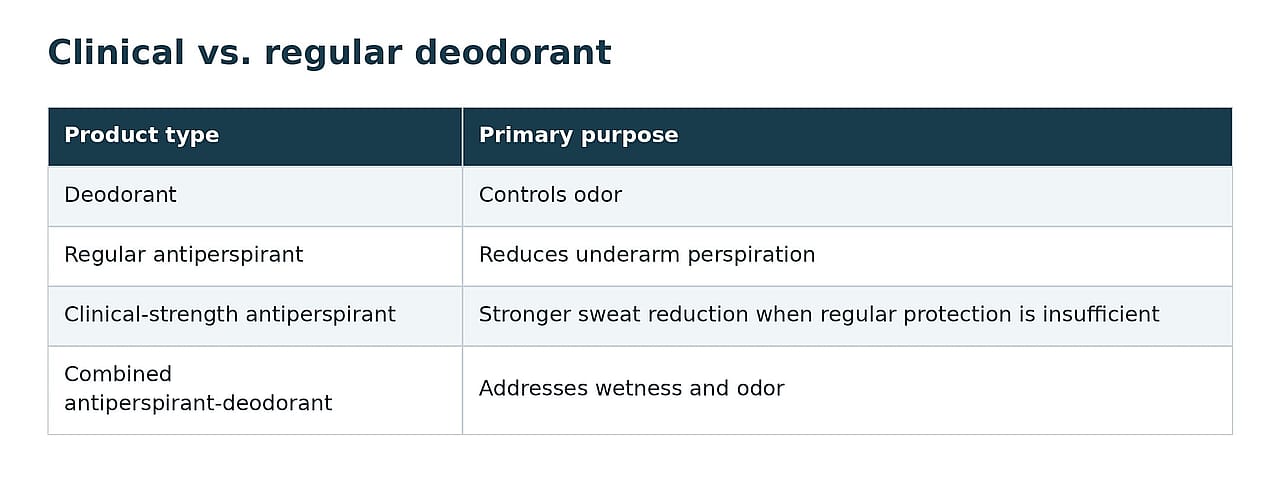
A deodorant helps control body odor but does not reduce how much you sweat. An antiperspirant reduces perspiration using aluminum-based active ingredients. Some products combine both functions.
In the United States, the distinction also affects regulation. Deodorants are cosmetics, while antiperspirants are regulated as drugs. Products that provide both benefits fall into both categories.
If your main concern is smell rather than damp clothing, stronger sweat protection may not be the change you need.
What “clinical strength” means
Clinical-strength antiperspirants generally contain higher concentrations of sweat-reducing active ingredients than regular-strength products. They are available without a prescription.
The label should identify the active ingredient and explain how to use the formula. “Clinical strength” does not mean that every product has identical ingredients, application instructions or results.
It does not mean the product will eliminate sweating; it only reduces perspiration where it is applied.
Decide whether you need stronger protection
Before switching, check that you are using your current antiperspirant according to its directions. Application timing and skin dryness can affect results.
If regular protection manages your wetness comfortably, there may be no reason to change. If underarm dampness continues to interfere with clothing or everyday activities, a clinical-strength option may be a reasonable next step.
The choice should reflect your experience rather than an assumption that everyone needs the strongest available formula.
Apply carefully and follow the instructions
Antiperspirants should be applied to completely dry skin. Nighttime application is often recommended because sweating is usually lower during sleep, giving the product time to work.
Follow the amount, timing and frequency stated on the label. Applying extra product is not a substitute for correct use.
Skin comfort matters too. If a formula causes irritation, stop using it and seek advice from a pharmacist or dermatologist about a suitable alternative. Avoid applying it to broken or irritated skin.
Know when to ask for help
Sweating that regularly disrupts daily life deserves attention beyond choosing another personal-care product.
A dermatologist can assess whether excessive sweating, known as hyperhidrosis, is involved and discuss treatment options. These may include prescription antiperspirants or other treatments depending on your needs.
Common questions
Is clinical-strength deodorant actually an antiperspirant?
A product designed to reduce sweat is an antiperspirant. It may also contain deodorant ingredients to address odor.
Is clinical strength the same as prescription strength?
No. Clinical-strength antiperspirants can be purchased without a prescription. Prescription treatments are a separate option that a healthcare professional may recommend.
Can I use a clinical-strength antiperspirant every day?
Follow the product’s directions or your clinician’s advice. Application schedules can differ between formulas.
Will switching to an aluminum-free deodorant reduce sweating?
An aluminum-free deodorant can address odor, but it does not provide the sweat-reducing action of an aluminum-based antiperspirant.
What if clinical strength still does not help?
Check your application routine, then speak to a dermatologist if sweating remains troublesome.
This story was produced by Degree Deodorant and reviewed and distributed by Stacker.


