Miami leads US watch boom while Pittsburgh quietly outpaces Los Angeles
Lifestyle

Audio By Carbonatix
2:00 PM on Tuesday, May 26
By Thomas Luthy for Helvetus, Stacker

Miami leads US watch boom while Pittsburgh quietly outpaces Los Angeles
The bling has a new American capital, and luxury watch brands betting on a strong 2026 in the United States are paying close attention to where their buyers actually live.
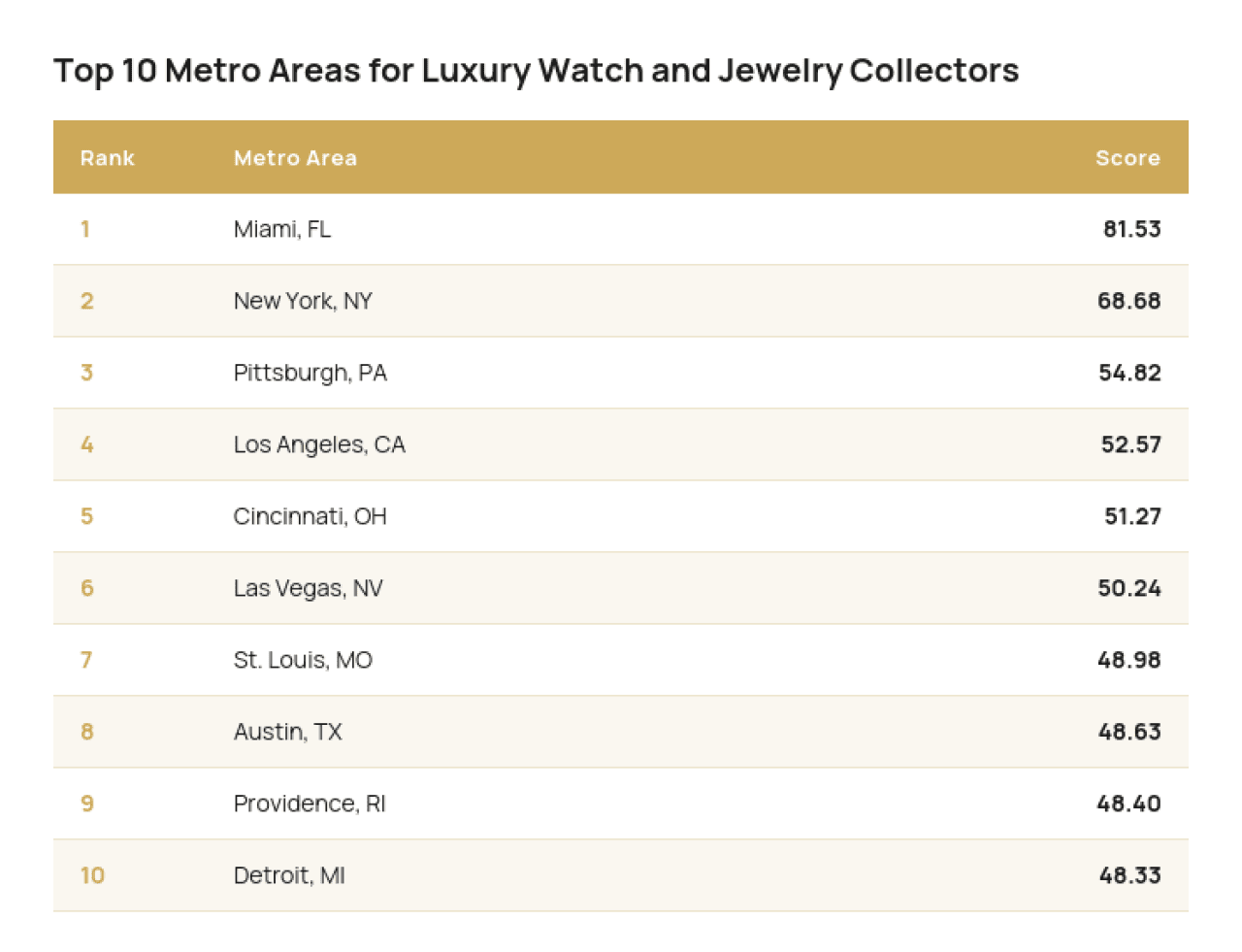
A 2026 ranking of the 49 largest U.S. metropolitan areas by the strength of their watch and jewelry ecosystem found Miami at the top by a wide margin, with the Rust Belt city of Pittsburgh in third place ahead of Los Angeles, Chicago, Dallas, and Houston.
The findings of a 2026 study by Helvetus arrive at a moment of pivotal importance for the global luxury watch trade. Conflict in the Middle East has stalled major export markets, and Swiss watch tariffs settled at 15% after briefly spiking to 39% last year. Brands are openly counting on U.S. demand to carry the recovery.
Miami pulls away from the pack
Miami posted a score of 81.53 out of 100. Second-place New York came in at 68.68. The 12-point gap between them is wider than the gap between New York and 14th-place Jacksonville.
The city has 840 jewelry and watch retailers across the metro, a rate of 13.44 establishments per 100,000 residents. That's the highest density of any city in the study. Top businesses average a 4.85 Google rating.
Miami has also become a center for the watch aftermarket. Two of the most prominent rubber strap makers in the world, RubberB and Horus Straps, are headquartered there.
Rust Belt cities punch above their weight
Pittsburgh's third-place finish is the most surprising result in the study. The metro of 2.3 million has 137 jewelry and watch retailers, producing a per-100,000 rate of 5.61. What pushed it up the rankings was the depth of its review signals — an average Google rating of 4.77 across 2,675 sampled reviews.
The pattern repeats across the Midwest. Cincinnati ranked fifth and posted the highest average Google rating in the entire study at 4.87. Detroit landed 10th with 303 retailers and a 4.86 average rating, the second-highest in the country. St. Louis took seventh.
The explanation tracks with how watch culture forms over time. Multigenerational jewelers built their reputations decades ago, and the skilled trades tradition kept independent watchmakers in business long after the assembly lines closed. That kind of ecosystem doesn't show up in population projections. It shows up in Google reviews.
Sun Belt growth cities lag behind
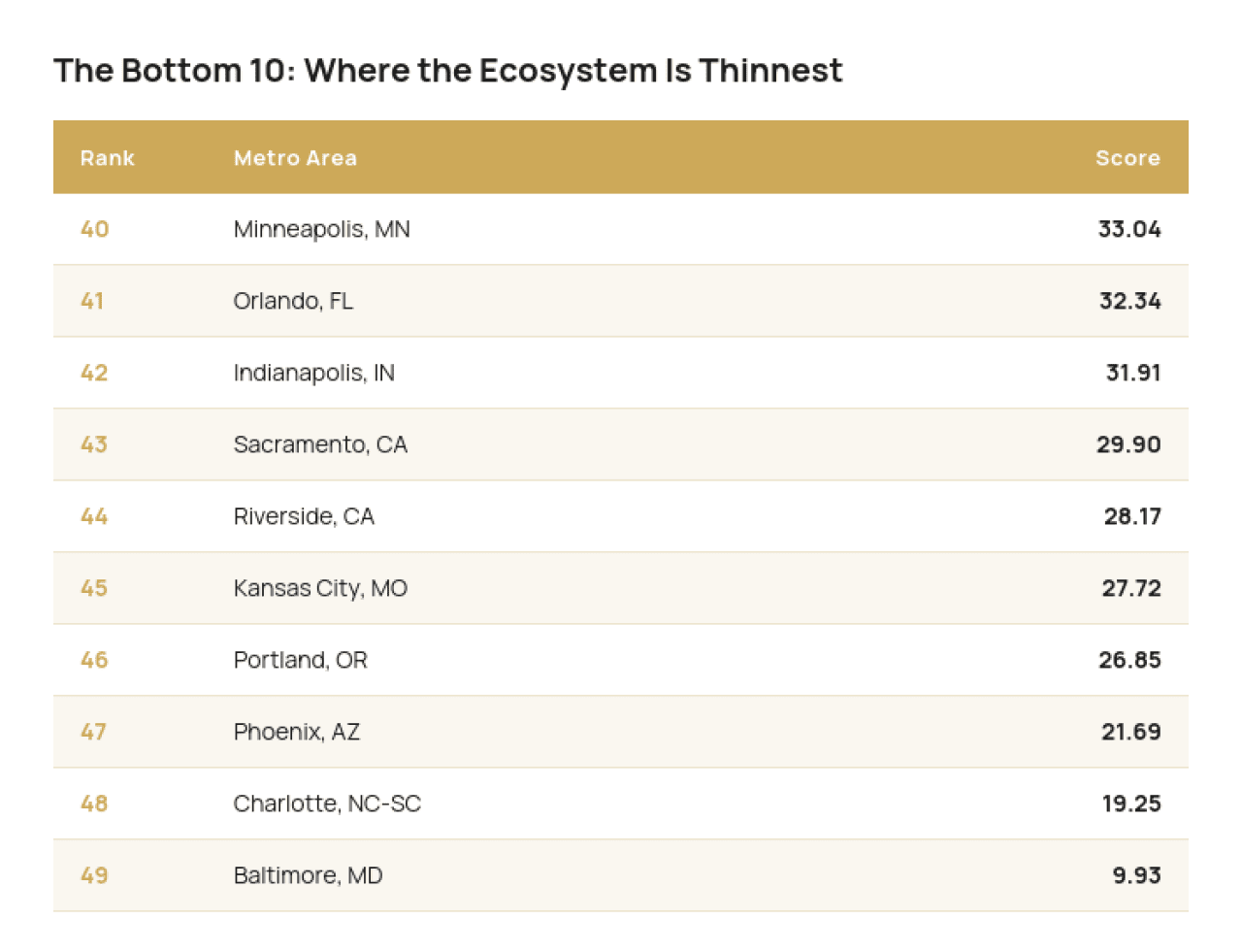
Some of the fastest-growing metros in America landed near the bottom of the ranking.
Charlotte ranked 48th with a score of 19.25 and an average Google rating of 4.48, the second-lowest in the country. Phoenix came in at 47th with a score of 21.69. Sacramento sat in the bottom five.
Watch culture is a lagging indicator of wealth. New residents and new income can arrive in a metro within a few years. The independent jeweler with 30 years of repeat clients and four-figure review counts cannot be conjured to match the pace.
Austin is the lone exception in the growth-city cohort, ranking eighth with a 4.82 Google rating. Tech relocations from San Francisco and Seattle brought a buyer profile that already had watch culture baked in.
Florida's edge extends beyond Miami
Florida is the only state with three metros posting above-average ecosystem scores. Tampa landed at 16th with a per-100,000 establishment rate of 6.84. Jacksonville came in at 14th with 6.12 per 100,000.
The state's older, wealthier resident base creates durable demand for watch maintenance and service. Add continued high-net-worth migration on top of that, and demand layers across generations.
The advantage isn't universal within the state. Orlando ranked in the bottom 10. Tourism-heavy economies tend to produce volume retail rather than the specialist infrastructure that serious collectors depend on.
What it means for 2026
The Bloomberg Subdial Watch Index gained 8% in 2025, hitting its highest level in two years. Patek Philippe raised U.S. retail prices 22.4% over the same period without losing buyers. With Middle East markets disrupted, the U.S. is being asked to carry the recovery.
Baltimore finished last in the study with a score of 9.93, the only metro to score below 10. Its Google rating of 4.20 was the lowest in the ranking.
For collectors, the city you live in shapes what you can buy and how well your collection gets cared for over time.
Methodology
To understand how American cities support luxury watch collecting and fine jewelry ownership, Helvetus ranked the 49 largest U.S. metropolitan statistical areas. Establishment counts were drawn from the U.S. Census Bureau's County Business Patterns program (2023) for NAICS codes 448310 (jewelry stores) and 811490 (other personal and household goods repair and maintenance). These counts were divided by metro population from the ACS 5-Year Estimates (2024 vintage) to produce a per-100,000-residents establishment rate. Review quality and activity data were collected from the Google Places API in April 2026. Each metro received a combined score weighted 50% on ecosystem density, 30% on review quality, and 20% on review activity. Results were analyzed by region, population tier, and growth rate to identify trends and disparities.
This story was produced by Helvetus and reviewed and distributed by Stacker.


