Five Steps to Building Your Kids' Emotional Health
Ministries > Focus on the Family with Jim Daly

Every child experiences some big emotions. As a parent, you want to teach them what to do when those feelings come. Counselor Eliza Huie equips you with practical ways to help your child move from chaos to calm, while reminding them that God is always with them.
Guest (Female): This program is sponsored by Focus on the Family, helping families thrive in Christ for more than 40 years.
John Fuller: This is John Fuller and please remember to let us know how you're listening to these programs on a podcast, app, or website.
Eliza Huie: If they don't know what's happening, if they don't understand what they're doing or what's going to go on next, if they're confused, oftentimes it comes out in resistance.
Jim Daly: That's Eliza Huie and she's with us today on Focus on the Family with Jim Daly. I'm John Fuller and thanks for joining us. Think of this moment in the grocery store where your four-year-old is standing there, and these grocery store marketing people have put all the best candy right at checkout. My wife, Jean, had this experience with Trent where he wanted that candy bar. He wanted it badly, to the point where he was throwing the temper tantrum. Unfortunately, I wasn't there, but a military guy in uniform came over and said, "Son, you listen to your mother." It just like, "Sir, yes, sir!" What a great example of that command and control. But we want to talk to you today about how to help your children emotionally regulate and to get control of their wee little disappointments in life that can spiral into full-on bad things. Our guest has done a great job capturing how to help your children get through those emotional moments.
John Fuller: A lot of simple, grace-filled ideas here that are probably a little hard to practice sometimes, but Eliza Huie knows how to put this into action. She has spent years helping parents navigate emotional health with their kids. She offers biblical wisdom and practical grace. She is a licensed clinical professional counselor and the director of counseling at McLean Bible Church in the Washington, D.C. area and teaches counseling at the college level. She also hosts a podcast. Today she's sharing insights from a delightful children's book she's written called Count Yourself Calm: 5 Simple Steps to Taking Big Feelings to a Big God. You can learn more about Eliza and this resource at our website.
Jim Daly: Welcome, it's good to have you. This is a great little thing, this book, Count Yourself Calm. I guess the first thing is, why as a counselor did you think this needed to be written?
Eliza Huie: I love that because I do see families. I do see little kids. There are parents who are really feeling overwhelmed by their kids' overwhelm. There's a lot of secular things out there for parents, which is great, and they can be very helpful. What I found was parents wanted something that aligned with what they are trying to instill in their kids as far as their faith goes. I wanted to take some of those emotion regulation tools that I've learned as a counselor and pair them with the truth of God's word. Bring those two together in a way that's actually not just helping them be calm, but helping them know who God is in the midst of their dysregulation.
Jim Daly: Jean and I did foster care for quite a while. I think over about a 12-year period, we probably had 15 children that came through our home. We had a couple of long-term foster placements with us. Some of them came with state-required counseling, so we would have to go with the children and participate in that. I remember one counselor talking about the lizard brain and the adult brain. Children have what they would refer to in counseling as the lizard brain. You're just reacting out of very fundamental needs. Even like the checkout that I was describing at the grocery store. They see candy, they want candy, I cry until I get candy. Talk about the mechanism of what's going on there and the right kind of biblical approach to how we're training our children up in the way that they should go.
Eliza Huie: Part of this too is what you're leaning into. You have to know where your child is because I think sometimes we can fall into the thinking that our kids are just little tiny people. Yes, they are, but they're also very early in their brain development as well. You're talking about that with the lizard brain. I think Dan Siegel has a model which I think is very helpful for parents where that lizard brain is talking about the amygdala, which is the emotion center of the brain. That is what mom and dad, you're seeing in that check-stand. You're seeing that emotion center be the biggest thing that's being reactive in the moment. We want to help parents understand that when you are talking with your kid, you're talking to that emotion center of the brain, not the logical part.
Jim Daly: In that regard, one of the things that you notice, again, I'll just use the grocery store thing, is a mom or a dad that's out of control themselves. They're not using their adult brain. They're down there in the fight with the child. They're both in the sandbox. What do parents need to realize to get above the fray, not be so emotional, and to be the parent of the child?
Eliza Huie: One of the key things that parents can really embrace that is going to help those moments is the idea of co-regulation. In that moment, if your wife is anything like me, I'm starting to feel the emotions. I'm starting to feel overwhelmed. I'm starting to feel embarrassed. We begin to react in that amygdala as well. We're reacting with our high emotions to their high emotions. The key thing that parents can really learn that will help is co-regulation. I'm going to regulate myself. I'm going to bring down my intensity so that I share it with you. Taking that deep breath. I've actually had parents read this book and say, "I needed this book for me first before I needed it for my kids," which is beautiful. You co-regulate by taking your own emotions to the Lord, breathing, and taking into consideration what I need so that I can give that and share that with my child.
Jim Daly: It's so important as we're talking about things that are out of control that you see in public. I've tried to train my mind to watch things too that are being well done. I've seen parents in the last month probably three or four times, in a hotel lobby or in a restaurant, where young parents are doing a pretty good job. They really are saying, "Honey, let me understand what you're feeling. I see you, I hear you, let's calm down." Speak to that ability as a parent then to help regulate a child's emotional moment and get them into a better place.
Eliza Huie: It's really a shift that's happening with parents and I'm so encouraged by it as well. It's a shift from, let me give you an example. Maybe in our years of parenting, a child is upset about something and you're trying to connect with them and you say, "Look at me. Look at me." That's what we would say. Where I now see the reframing as, "Show me your eyes." There's such a difference because what you're doing in the moment before when you're saying "look at me" is you're commanding them and seeking to control. When you have a situation where a child is completely responding in their emotion part of their brain, they're out of control. For you to get into that "I need to control you" becomes a power struggle. Whereas if you were to say, "Show mommy your eyes, show daddy your eyes," all of a sudden I'm inviting you into doing something with me. I want to see something. It just lowers the emotional sensitivity in that moment. When they show you your eyes, then you're connecting with them. It's said a lot that you want to connect before you correct. In order to connect, you need to be able to understand what they are emotionally feeling.
Jim Daly: When you say connect, in many ways you're using the word empathy. The importance of empathy and why a child needs to feel that you're empathetic. This is without spoiling the child. These are all balancing things. What does it look like to show empathy to a four-year-old who's out of control?
Eliza Huie: I think that's an important part that you're saying. We don't want to just give into every whim because there are some emotions that actually need to not be expressed so fully and are unacceptable and hurtful to others. Being able to recognize one thing that I've understood is that being uncomfortable does not necessarily equal being unsafe. Sometimes what you're experiencing in your child is unsafe. As parents, we need to understand the difference. Is this just the child is uncomfortable or are they unsafe? If they're unsafe, then I need to move in with a little bit more parental authority. If they are uncomfortable, it becomes a moment for me to understand what it's like, and that's what you're speaking to, that empathy. I want to know what it's like for you.
Jim Daly: Your grandson has a coping mechanism. I'm sure grandma has helped. What's your grandma name?
Eliza Huie: I wanted to go very traditional and just go with Grandma. That is what I went with, but he calls me Gum-Gum and still calls me Gum-Gum, so that's very endearing.
Jim Daly: What's his little method?
Eliza Huie: This was such a sweet thing to see. I was able to witness this. I would love to be able to take credit for this, but I do think my kids are doing such a great job probably from resources like you have here. My grandson, like many two-and-a-half-year-olds, was having a moment where he was feeling very upset that he couldn't go outside at the moment that he wanted to go outside. I loved watching my son. He got down to his level and he said, "We're going to take a breath. We're going to take a breath together." He modeled it. I think that's what's so important is for parents to do it with them. Don't just say, "Take a deep breath," but get down at their level and breathe with them. In a sense, you're sharing that regulation. That's that co-regulation. Then he told him, "I'm going to give you a big hug and we're going to breathe one more time together." He knew what was coming. He gave him that hug and he breathed with him and he just calmed right down. It was such a great moment. He still was a little bit upset that he didn't get to go out then, but he wasn't overwhelmed.
Jim Daly: I think young moms and dads, again as I've observed many, are doing a good job. They're far more intentional than perhaps their parents were. Generationally, I think that's a healthy move. That self-regulating habit, as you described, it's not something you can just say once and be done. I think this is where a lot of us as parents, this would have been one of my soft spots that I didn't really do as well as I could have. I was like, "I've already told you this three times. Could you just get it now?" I never said that, but that's how I was acting. You do need to set patterns in your children's lives that help them, like that. How do you brace for the long haul? It's like please and thank you. Did you have that experience where you said please and thank you 10,000 times? Then at age 11, you hear it for the first time when they automatically said thank you and you went, "It worked! They got it!" But there was 10,000 times you trained them to say please and thank you. How do you apply that repeat to your child so that they catch it?
Eliza Huie: I think that's exactly what you're talking about. We repeat certain things. We repeat certain words, like please and thank you. Manners. We repeat hygiene practices with our kids, right? Time to shower, brush your teeth, wash your hands. We repeat it every single time they go to the bathroom. You come out and we ask, "Did you wash your hands? Go back in and wash your hands." We're on that mindset with things that are physical health or even our relational health, please and thank you. How about our emotional health? I think sometimes we are okay with our kids having the vocabulary of just three or four words for emotions. We're either happy, sad, angry, or bored. Something like that.
Jim Daly: In my parenting journey, I didn't realize you could buy charts that have those faces. I drew them every time! "How are you feeling?" and I'd put nine faces up and they'd pick one.
Eliza Huie: Fantastic! There's one in the back of the book that goes along with the book. This just pairs so nicely. We want to expand our children's vocabulary with emotions.
Jim Daly: Some hearing you're going, "Okay, that's all good, but where's the spiritual content?" It's great that your kids can express their feelings and they can breathe deeply when they're in trouble. But you are really doing a good job in here to talk about the spiritual component of all this too. What does God's word say about it?
Eliza Huie: One of the things like I mentioned, there's a lot of tools in the secular world and the clinical world, so many for children on regulation and help for parents. I brought in the scripture because we're always trying to bring in where can we bring God's word into our everyday lives with our kids. One of the things that I do is even as you're taking that deep breath, pairing that breath with scripture. "God, help me know that you're here." Taking a deep breath in. "God, help me" as you breathe in, "know that you're here" or "know that you're with me." There's various places in the books where I pair even the five steps that we talk about. That's just what the clinical world would call a regulating skill: noticing five different things. But what if we notice five things that God gives us? What about five things in creation that make us feel calm? Helping your kids point those things out, connecting it with the Lord.
John Fuller: Really good stuff today on Focus on the Family with Jim Daly. Our guest is Eliza Huie and she's written a delightful kids' book that is actually pretty good for some of us adults. It's called Count Yourself Calm: 5 Simple Steps to Taking Big Feelings to a Big God. We'll encourage you to get a copy of the book from us here at the ministry. It's got that chart. When you're on the website, we have additional resources as well. Give us a call at 800-A-FAMILY or stop by focusonthefamily.com/broadcast. A moment ago you mentioned the importance, Eliza, of putting words to these feelings. To what end? My child is still throwing a temper tantrum and they're at least able to say, "I'm feeling really frustrated." How do I attach the name of the emotion to moving forward?
Eliza Huie: Well, I think that's a great question because when we name what they're feeling, there's a little slogan out there in the counseling world: "When you name it, you can tame it." I think that's a big help. I also think it helps us as parents to not wrongly miss what they're actually feeling. I think that comes up in all ages of kids where you might see what you think is anger and it comes out as anger, but there's actually something deeper. This is the same for adults, right? I might express what I'm feeling in anger, but what I'm really feeling is I'm afraid in that moment or I'm unsure. That's especially true for kids. If they don't know what's happening, if they don't understand what they're doing or what's going to go on next, if they're confused, oftentimes it comes out in resistance. It helps us to not miss.
Jim Daly: Again, that's using the adult brain to understand the circumstance that the child's in. What's underneath the emotion they're expressing? That's a great place to start in your marriage, let me tell you. "Okay, what's this trigger doing? Why are we in this thing together and what did I say that got you here?" It's true with the kids too, especially true because they don't have all the tools developed yet to really understand why they're reacting.
Eliza Huie: I will tell you, you do these things with your kids and you're going to do them in your marriage and in your adult relationships as well. When you begin to say, "Okay, I don't know exactly what they're feeling, let's explore that together."
Jim Daly: You once knew a little girl and her story was her house burned down. What happened in that situation?
Eliza Huie: She obviously experienced something very traumatic. Yes, praise God, everybody was okay. But then moving away from that, they were able to get into a new house and get things more stable, she was struggling going to sleep because the fire happened at night. The fear was, "If I go to sleep, how do I know that there's not going to be a fire?" That makes sense, right? In some ways it does make sense, but the fear began to be so big that she began to have a lot of anxiety at night. Her parents actually used this book. I just so loved they wrote the story to me and shared it to me how they used the five steps as prayers each night. It began to help her calm down in the evenings when she was feeling that tension because it reoriented her thinking. It pulled her thinking away from the anxiety, away from the fears and onto God and onto his peace and his promises.
Jim Daly: As parents today, especially of young children, there's so much anxiety going on for all kinds of reasons. Social media, school, pressure, performance, all the things that we need as parents to be in tune with how we talk to our children age-appropriately about what they're experiencing. In the book, you introduce five simple steps to calm. How does that routine help children move from that panic mode and feeling overwhelmed to peace, God's shalom?
Eliza Huie: It's so interesting because a lot of the things that we're talking about are things that we do, but we see them in kids and we're like, "We've got to fix this." We kind of live in that space sometimes. What we're getting at with this practice is helping kids begin to see. You have so focused on one thing: the fear of your house burning or the fear of whatever it is, something going on at school, or whatever's upsetting them. You've so focused on that candy bar that you've lost what else is true. Beginning to help them see what else is true is really important. It's something that they can actually pull out when they're asked. If you don't begin to say there's other things that we can think about, they so narrow on that one upsetting situation. We're really just expanding, "Yes, this happened and what else is true?"
Jim Daly: One of the mechanisms you describe is counting to calm. What does that look like?
Eliza Huie: It's taken from, like I mentioned, a regulation skill that we use. The skill is five things that you see and you name those five things. Four things you hear and you name those four things. You go through the senses. What you're doing is you're giving your brain a little bit of a break because it takes maybe to read this book, maybe it takes 10 or 15 minutes to read this book, but it gives your brain a break from thinking about that anxiety. We don't want to just give your brain a break; we want to actually give your brain new ways of thinking. What it does is as you walk your child through each one of the five things, five things that God has given you that you see in creation that give you peace or four things that make you feel joy. You're beginning to pull your child away from that anxiety and onto the truth of who God is.
John Fuller: Really good stuff today on Focus on the Family with Jim Daly. Our guest is Eliza Huie and she's written a delightful kids' book that is actually pretty good for some of us adults. It's called Count Yourself Calm: 5 Simple Steps to Taking Big Feelings to a Big God. We'll encourage you to get a copy of the book from us here at the ministry. It's got that chart. When you're on the website, we have additional resources as well. Give us a call at 800-A-FAMILY or stop by focusonthefamily.com/broadcast. You mentioned about the importance, Eliza, of putting words to these feelings. To what end? Okay, so my child is still throwing a temper tantrum and they're at least able to say, "I'm feeling really frustrated." How do I attach the name of the emotion to moving forward? There's a proactive element here and that is to try to get ahead of your child's big emotions. I had a house full of kids and I was always playing catch up and I was that command and control person for a while because there's just too much. For any parent listening, first, is it too late to try to get ahead of it? Second, what are some practical ways to do that?
Eliza Huie: It is never too late. In fact, I would say if your child is a little bit older, I've had teenagers reach out to me and say, "My mom got this book for my seven-year-old sibling, but I love it." This book is helpful in that sense, but what it really is speaking to is less about the book. It's about the desire to be able to understand how do I better understand my emotions and regulate them. Regulate them isn't really the word I want to use. It's regulate them. We want to bring them back to a place of "I can cope, I can have this emotion and I can cope." That's really what we're trying to give to our children. You're asking for practical ways. You cannot give what you do not have. Moms and dads, it's really important for you to be able to have an expanded vocabulary. I had somebody I was doing marriage counseling and I was talking to them about emotions and the husband pulled out his wallet and he pulled out this little tiny card. He said, "I found an emotions wheel and I shrunk it down and I laminated it and I put it in my wallet." He is realizing I need to learn that there's more emotions between happy and angry. There's a whole lot of other things going on. Moms and dads, grow in your emotional vocabulary. Moms and dads, model how you're regulating. One simple way, this is a real practical step, one simple way to model that is to narrate your own emotional process. When you're in traffic and you're feeling overwhelmed and somebody does something that makes you angry, narrate it. "I'm feeling really overwhelmed right now. That person, their response kind of triggered me to be angry. I don't want to be angry. I'm going to breathe." Your kids are hearing this and they're watching you experience something hard and regulate. Even bringing in, "Lord, help me to have a right response right now." You're modeling as you narrate what you're doing. I think probably one of the biggest mistakes I made in my parenting was kind of having that mindset of formula and it was deeply rooted in fear. I parented a lot out of fear. "If I do this, will they do that? If I don't do this, then they're probably going to do this." There's a lot of fear that can come up. "If I don't correct that, then the fear is they're going to end up in jail." Before I knew it, I had my kids in jail. I think the key is to get away from that formula, get away from that fear and say, "Okay, Lord, I need faith. I need to trust you that this is going to be a practice. There's going to be successes and failures in my parenting, but I'm going to parent out of faith, not formula."
Jim Daly: As a counselor especially intervening with families that are coming to you, mom and dad are coming with their teen child, what are the patterns that you see there for the parents that have really created—and it's hard for us to see as the parent—but that we have participated in creating in this child dependencies that are unhealthy?
Eliza Huie: I'll give you two that come to mind. The first one is we react to every situation. We're just reacting instead of, like you mentioned, being more intentional how you're seeing parents be very intentional. That's what we really want to be is, "How do I want to respond? How do I want to move into this rather than just react?" That's one that we kind of need to say, "Okay, I need to stop just reacting." The other thing, and this is true of parents of every age and stage, but especially what you're sharing like, "Okay, I'm at this point, I maybe made some mistakes," I would encourage you to not make every situation a teaching moment. It feels like we should but instead listen and be curious. Be curious about their emotions like we're talking about today. Be curious about what they're thinking. Especially if you have a kid who doesn't have a big emotional vocabulary, then don't say, "What are you feeling?" because they're going to be like, "I don't know." Instead, "What are you thinking? What thoughts went through your mind when that happened to you?" Get curious and ask those questions rather than teach the lesson.
Jim Daly: I think that's so good. I think the other thing in my parenting experience is not every mountain is a mountain. Some mountains are molehills and they're not worth the fight. It's really small. Let the small things pass and concentrate. Eliza, this has been so good. What a simple concept, Count Yourself Calm. Great book. Target age range for this is?
Eliza Huie: It's really written for four-to-seven-year-olds, but like I said, I've had a lot of older kids and moms and dads say thank you for writing this.
Jim Daly: You've given us some great tips to incorporate as parents. Thank you for being with us.
Eliza Huie: It was a pleasure.
Jim Daly: Let me turn to the listener. I hope you know Focus on the Family is here for you. As we've said, every child will experience moments of fear, frustration, overwhelm, sugar-anger, but you know what, honestly, with your love, God's truth, and a little bit of practice and encouragement, they can learn healthy ways to navigate those big emotions. One helpful resource we'd love to share with you is our Seven Traits of Effective Parenting Assessment. That's been online for a number of years. Hundreds of thousands of parents have taken it. It takes about 10 minutes and it'll show you some strengths and weaknesses in how you're doing your parenting role. It's very effective and very helpful. We also have Eliza's great book, Count Yourself Calm: 5 Simple Steps to Taking Big Feelings to a Big God. It's filled with great, simple, biblically-based help for you as a parent. If you can make a gift of any amount, jump in and join us in the ministry. We'll send the book to you as our way of saying thank you for that gift. Let me share with you what that donation helps to create. We got a note from David who wrote in to tell us this: "I'm so thankful for Focus on the Family and the encouragement you've given me over the years. So much of what I've learned about parenting has come through your broadcasts and resources, helping me become the kind of parent I want to be." That is so rewarding. He went on to say, "Thank you for faithfully being there for those of us who need biblical wisdom, practical help, and a listening ear." That is really encouraging to hear. It's what makes our heart leap, gives us joy to know that we're on target. We've been at it for 50 years. We're going to be celebrating our 50th anniversary here in 2027. That is the fruit of what we want to see. Thank you. I want to ask you, if you have a testimony of where Focus has helped you, get in touch with us. Leave us a note. Drop us a line. You can go to the website. I think there's something there, John.
John Fuller: We've got a spot there where you can tell us your story and we'd love to hear from you. That is fuel that goes so far for the donor community as well as the staff and the team here. Do that, that really helps out. Reach out today, take that parenting assessment, donate and get your copy of Count Yourself Calm, and leave us a note. Our number is 800-A-FAMILY and all those resources and more are available at focusonthefamily.com/broadcast. Coming up next time, feeling God's call to become a foster care or adoptive parent.
Guest (Male): So I fixed up my rooms and started the classes and every night I would just go and kneel over the beds. I knew that whoever would be in those beds needed the prayers the most at that time. I would just pray and pray that whoever would show up on my doorstep.
John Fuller: Thanks for listening today to Focus on the Family with Jim Daly. I'm John Fuller inviting you back next time as we once more help you and your family thrive in Christ.
Danny Huerta: Watching your teen wrestle with anxiety can be heartbreaking. Whether it shows up through stress at school, friendship struggles, or deeper fears that are hard to put into words, you're not alone and hope is possible. In this new podcast, Fearless Faith, I unpack where anxiety often begins and young adults share how they've found healing through faith, trusted support, and simple tools that make a real difference. Discover more at navigatingteenanxiety.com.
Related Episodes
Renewing Your Mind, Rewiring Your Brain
Saturday, September 5
Practical Help for When You’re Overwhelmed - ll
Thursday, September 3
Practical Help for When You’re Overwhelmed - l
Wednesday, September 2
Related Videos


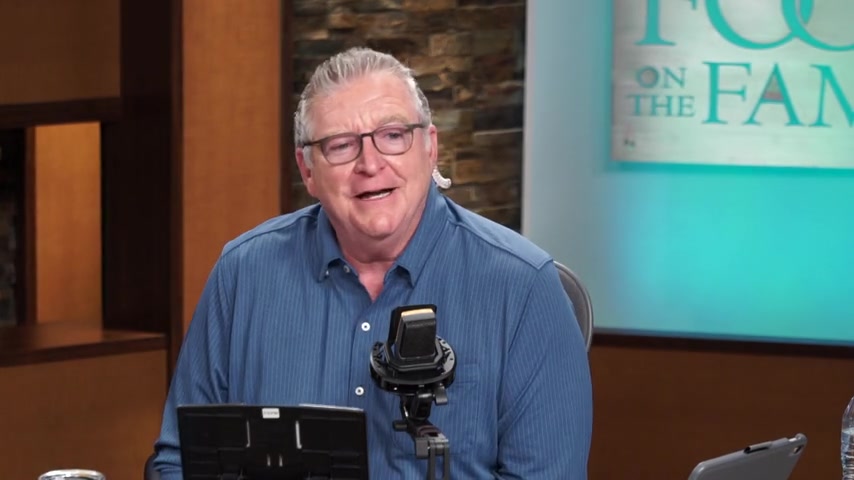
About Focus on the Family
We want to help your family thrive! The Focus on the Family program offers real-life, Bible-based insights for everyday families. Help for marriage and parenting from families who are in the trenches with you. Focus on the Family is hosted by Jim Daly and John Fuller.About Jim Daly
Jim Daly
Jim Daly is President of Focus on the Family. His personal story from orphan to head of an international Christian organization dedicated to helping families thrive demonstrates — as he says — "that no matter how torn up the road has already been, or how pothole-infested it may look ahead, nothing — nothing — is impossible for God."
Daly is author of two books, Finding Home and Stronger. He is also a regular panelist for The Washington Post/Newsweek blog “On Faith.”
Keep up with Daly at www.JimDalyBlog.com.
John Fuller
John Fuller is vice president of Focus on the Family's Audio and New Media division, leading the team that creates and produces more than a dozen different audio programs.
John joined Focus on the Family in 1991 and began co-hosting the daily Focus on the Family radio program in 2001.
John also serves on the board of the National Religious Broadcasters.
Contact Focus on the Family with Jim Daly
Mailing Address
Focus on the Family
8605 Explorer Dr.
Colorado Springs, CO
80920-1051
Toll-free Number
(800) A-FAMILY (232-6459)


