Come And See His Agony – Part 2 of 2
Ministries > Running To Win with Dr. Erwin W. Lutzer
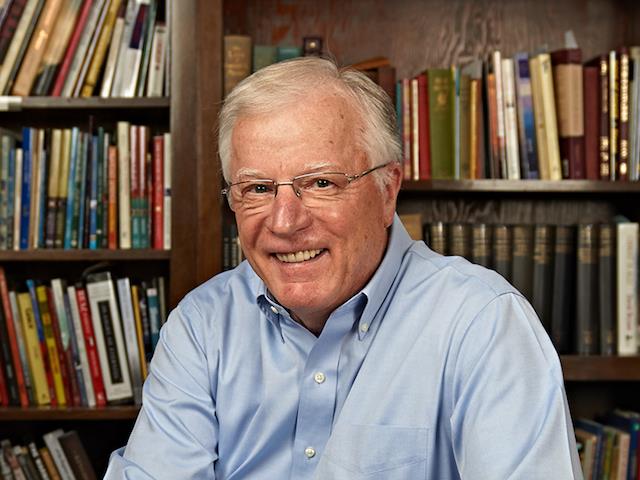
Some Christians believe the walk of faith should bring them happiness and prosperity. But our Lord’s real legacy includes suffering. In this message from Matthew 26, Pastor Lutzer shares three takeaways from Jesus’ unanswered prayer in Gethsemane. Let’s discover the significance of Jesus’ groan, “Not my will, but Yours be done.”
David McAllister: Let us run with endurance, the race that is set before us. Looking to Jesus, the founder and perfecter of our faith. Gethsemane lies on the Mount of Olives. Here, Jesus spent a night in agonized prayer before being nailed to a cross. His task to drink the cup of suffering for you and for me. What does this mean? Stay with us. From the Moody Church in Chicago, this is Running To Win with Dr. Erwin Lutzer, whose clear teaching helps us make it across the finish line.
David McAllister: Pastor Lutzer is showing us portraits of Christ in a series he's calling Come and See Jesus. Pastor, the cup of suffering is symbolic, or was it real? Help us walk with you as we come and see His agony.
Dr. Erwin W. Lutzer: Well, David, it wasn't an actual cup like we might have as we sit down to a meal. But of course, the cup symbolized something that Jesus had to drink figuratively speaking, namely taking the judgment of God on behalf of our sins. I love the fact that Jesus Christ was willing to do that, and I am so blessed because of this ministry, Running To Win. It goes around the world, letting the entire world know that Jesus Christ is actually a savior, not just a teacher. And my friend, if you're listening to this broadcast and you have been blessed because of this ministry, would you consider blessing others by making an investment?
David McAllister: And during this month, your gift will be doubled. Imagine that. $50 becomes a hundred, a hundred, 200. Of course, you can do the math. The amount that you give is of course, your decision. We are deeply grateful for every gift, and we don't take you for granted. And as an expression of our appreciation for your contribution, we are making a special gift available. It's a book entitled Christ among other Gods that defends not only the deity of Christ but the uniqueness of Jesus Christ as a savior. You can use it as a witnessing tool. Give it to skeptics. So that they can understand how Jesus Christ differs from all other people out there, all other religions.
David McAllister: Now let's go to the pulpit of Moody Church.
Dr. Erwin W. Lutzer: There were actually three cups on Calvary. There was the cup of compassion. You remember when they brought Jesus to Calvary? It says the first thing they did is they tried to give Him some myrrh mingled with wine. That was a sedative to try to make it easier. It was a cup of compassion. They'd give that to prisoners who were being executed. Jesus refused it. Then there was the cup of mockery. You know, it seems to me that when Jesus was there crying, "My God, my God, why hast thou forsaken me?" and they misunderstand Him, and then somebody takes some cheap wine that the soldiers had, some cheap vinegar wine. And they take that vinegar wine, and they put it on a sponge, and they put it to His lips, almost mocking Him. Exactly, how is that going to help His excruciating thirst and the agony? But there was a third cup on Calvary, and that was the cup that was filled with iniquity, as He, the sinless Son of God, would be made sin for us. That was the cup. And Jesus refused the sedative because when it came to drinking the Father's cup, He did not want a sedative. He wanted to drink it straight. And drink all of it so that you and I could be redeemed. Death and the curse were in our cup, oh Christ, 'twas full for Thee, but thou has drained the last dark drop 'Tis empty now for me. And those of you who have never trusted Christ as Savior. Those of you who think of Him as a great prophet, as a great man, someone whom you admire, but not someone whom you are cleaving to to be your Savior. I urge you quickly come to Him because if He has not borne your iniquity, you shall bear your own for all of eternity. It is here. It is here in the garden that Jesus receives the strength to receive the Father's cup. You'll notice it says He finds the disciples sleeping, verse 40. That's a picture of the church today. Great social transformation, great need, time of great agony, and we're asleep, just acting as if history's going on as usual. And He says, "Watch and pray that you may not enter into temptation." I love this. Jesus didn't say, "Watch and pray so that you help me." He says, "Watch and pray for yourselves that you may not enter into temptation." He said, "The spirit is willing. Oh, yeah, yeah, yeah. Do you want to do this? Yeah. Uh-huh. Sure, we'll be with you. Sure, we'll we'll pray, we'll give, we'll go." But when it comes to crunch time, the flesh is so weak. He prays a second time, verse 42. "My Father, if this cannot pass unless I drink it, Your will be done." And again, He finds them sleeping because their eyes are heavy. So leaving them again, He went away and prayed for the third time saying the same words. It's okay to pray the same thing again and again as you spill out your heart to God. Jesus did. What are some of the lessons that we learn, the take-home value of all this for ourselves? First of all, some of our most earnest prayers go unanswered. Some of our most earnest prayers go unanswered. You know, here is Jesus, the Son of God, praying in agony. And the Bible says in the book of Hebrews that the Father heard the Son pray. But there is no way out. And so Jesus has to endure the cross. Now, I need to say that I believe that all of Jesus Christ's prayers were answered. That's not true of us, but all of His were. You say, "Well, God didn't answer Him here." Yes, He did because you'll notice Jesus didn't pray, "Father, get me out of this and take me straight to Heaven." I believe that if Jesus had prayed that, that's what the Father would have done and said, "Well, then the whole human race, they will all go to hell. Come up and be with me." But Jesus didn't pray that. Jesus knew that His desire might be that He might find another way. But at the end of the day, He says, "I yield my will to You. And if I yield my will to You tonight, I will yield my body to You tomorrow because the body is going to follow the will and tonight here in Gethsemane, thy will be done," said Jesus. But we don't get all of our desires when we pray, do we? Some of you have agonized before God regarding healings, regarding circumstances, and sometimes all that we can do is to go with Jesus and say, "Father, this is my desire." But at the end of the day, "Thy will be done." And you need to pray not because you get your desire, but you need to pray so that you get the strength to accept whatever it is that God gives you. Ivan in a Russian concentration camp is a Christian. And he is praying to his God with his eyes closed. And another prisoner making fun of him says to him in ridicule, "Ivan, praying is not going to get you out of this place any sooner." And Ivan says, "I'm not praying to get out of this place. I'm praying for strength to do the will of God." And sometimes we pray for strength to do the will of God, and it is not our desire because we have other desires, which may even be good desires, but at the end of the day, we say, "Thy will be done," even at great personal cost. Second, our cups. This is critically important. Our cups must be accepted from the hand of the Father, not from the hand of people. Let me say that again. Our cups must be accepted as from the hand of God, not from the hand of people, no matter what their intention is. You know, Jesus in John 18 verse 11, He did not say, "Now the cup which the Sanhedrin are preparing for me, must I not drink it?" He didn't say, "Now the cup which the Jewish leaders are preparing for me," or "The cup that Pilate has in mind for me, shall I not drink it?" Or, "Or the cup that the Roman soldiers are preparing for me, shall I not drink it?" No, all of that was part of the cup. But He says, "The cup which My Father has given Me, shall I not drink it?" So you look at the dilemma that you are in today. You look at the human conflict. You look at the agony, and what you will discover is that at the end of the day, you must receive the cup as from God. Sometimes people send me poems, I receive a lot more than I ever use. Some poems have poor theology, some have good theology, and some have outstanding theology. This is one of those with some outstanding theology. Listen to this. "I will not take that bitter thrust which rent my heart today as coming from an earthly soul, though it was meant that way. But I will look beyond the tool because my life is planned. I take the cup my Father gives. I take it from His hand." "He knows and even thus allows these little things that urk. I trust His wisdom and His love. Let patience have her work. Though human means have brought the sting, I firmly take this stand. My loving Father holds the cup. I take it from His hand." Now, those who watch may wonder why these things do not disturb. I look right past the instrument and see my Lord superb. Isn't that great? "The trial which would lay me low must pass through His command. He holds the outstretched cup to me. I take it from His hand." The cup that your Father has given you, shall you not drink it? Don't ever look at the cup as coming from a friend who has wronged you. Don't ever look at a cup as a human issue which makes you bitter and angry because the cup has come from the Father to do something in your life that no good time could ever possibly do. The cup comes to you from your Father. It was William Barclay who says, "The love of God wants what is best for us. The wisdom of God knows what is best, and the power of God has the ability to accomplish it." Can you receive the cup from the hand of your loving, loving Heavenly Father? There's a final lesson, and it's the obvious one. Folks, guess what? It's not about us. It's not about whether or not we get money, whether or not we're promoted, whether or not we're appreciated, whether or not we get what we think we need and what we want, and marry the person that we believe should understand, you know, it's not it's ultimately not about us. It's about the Father. It's about the will of God. It's about that that cup that the Father gives us, and He gives different cups to different people. And we drink it as from His hand, and at the end of the day, the issue is not my will, but thine. That's the issue. It's always the issue. You know that I love the words of this song, and I quoted it once and said that I'd love to have the words, and I always forget that we're also on radio, so I received all of these folks sending me the song. So you folks out there, God bless you, but I have the words now. "My Jesus as Thou wilt. Oh, may Thy will be mine. Into Thy hand of love I will my all resign. Through sorrow or through joy, conduct me as Thine own, and help me still to say, 'My Lord, Thy will be done.' Not my will, not my will, but Thine be done." Let's pray. Father, in our rebellion, in our hardness of heart, in our desire to get what we want and to explain to You why you should give it to us. We ask today that You might give us a sense of submission. There are many people listening drinking some very, very bitter cups. We pray, oh Father, that they shall accept them as from Your hand and drink them for Your glory. We ask today, Father, that You might help all of us to see that Your grace that was shown to us in Gethsemane and Calvary, and Your agony is also our pattern at times. And may we have the same determination to do Your will and to drink the cup that You've given us. Grant that, oh God, we pray. And now before I close this prayer, what is there in your life that clearly is under your authority and not God's? What is it that you need to give to Him to say today, "I receive this cup from Your hand." Oh Father, we know that the work that You desire to do in us cannot be done in a moment. It can begin now, but it must be completed later. Work mightily in Your children. Give us unrest until, Father, we kneel with Jesus in Gethsemane and say, "Thy will be done." We pray in His name. Amen. Amen.
David McAllister: Well, this is Pastor Lutzer, and I want to share my heart with you. I'm so glad, and I hope that you are also, that Jesus Christ was willing to endure Gethsemane and then, of course, the cross. He did that for us. And we here at Running To Win believe that this is the most important message that the world can ever hear. And the reason that we are able to share the gospel in so many different countries of the world is because of people just like you, sharing our vision, holding our hands in prayer, and with their gifts so that together our impact can be increased.
David McAllister: Now, during this month, this is very exciting. Any gift that you give will be doubled. What an opportunity it is for some of you who perhaps have never given to this ministry. Many of you perhaps have given in the past, and you would like to invest again. Remember that your gift will be doubled. And as an expression of our appreciation, we're making available for you a book I've written entitled Christ among other gods. What this book does is it explains why Jesus Christ is unique. It'll enable you to defend the faith, and there are many people who are giving this book to those who are skeptics, those to whom they want to witness because it explains that Jesus Christ cannot be put on the shelf with other gods.
David McAllister: Very quickly, sure hope that you have a pen or pencil handy because here's what you do. You go to RTWoffer.com. That's RTWoffer.com or pick up the phone and call us at 1-888-218-9337. Right now, go to your computer, type in RTWoffer.com.
David McAllister: Time now for another chance for you to ask Pastor Lutzer a question about the Bible or the Christian life. Is it possible to love your children more than God loves them? Beverly listens to Running To Win, and she thinks this may be the case. Here is her story.
David McAllister: I've always been taught that God loves all people unconditionally and that when we accept Jesus as Savior, we go to Heaven. If not, then we go to hell without any opportunity for repentance. I have two children whom I love and would die for. If they someday would turn against me or commit heinous crimes, I would be heartbroken but would continue to love them. Where does that spirit of grace come from? Surely not Satan who only wishes ill to befall all of God's creation. This spirit of unconditional love must come from God in whose image we were created.
David McAllister: However, God does not hold to this same standard. He made it clear that when our physical lives end, so does any hope of mercy if we've not accepted Christ. Suppose I were to tell my children that if they left me, I would punish them forever. I could never tell them that. Why does it seem that God does that? I want to love and serve God with joy, but this point is making it very difficult for me to do so. Any clarification would be appreciated.
Dr. Erwin W. Lutzer: Beverly, I've been a pastor for many, many years. I've had many, many questions asked me. And in many respects, I have to say that what you've asked is one of the most difficult questions that I've ever had put to me. Now, the good news is that it's not as if I haven't thought about these things. I've thought about them for years, but they are very difficult. And I can only hope that I speak here in accordance with God's word. A couple of things.
Dr. Erwin W. Lutzer: I have to challenge your premise that God loves everyone unconditionally. I know that we hear that a lot, but you know, the Bible says, for example, in the book of Psalms that God is angry with the wicked every day. I don't think you could prove from the Bible that God loves everyone unconditionally. I believe that He loves His children unconditionally, and that's a different kind of love. I think Jesus made this clear in the 17th chapter of the book of John where He talks about the love where with you have loved me, that is the love with which I have loved them. But that's a reference to His children and not the world generally.
Dr. Erwin W. Lutzer: So that's the first point I'd like to make. As a matter of fact, if you study the word love in the Bible, you know that there are different ways that God loves people, and I think He loves His own children unconditionally, but I can't say that about everyone.
Dr. Erwin W. Lutzer: Secondly, you ask whether or not God plays by a different set of rules. I think He does. God doesn't do the same things that we do. I could give examples of, for example, if you were beside a swimming pool and a little two-year-old fell in, and you just sat there and watched him drown, you'd be culpable because there's something that you could do about it. God sees that kind of thing happen every day and does nothing, and yet we don't hold Him culpable and say that quote, "It's His fault." So you can see here that God is God, and we aren't.
Dr. Erwin W. Lutzer: So, even though you love your children unconditionally and think that you would never turn against them, a simple fact is that God loves the world differently, and yes, it is true. He has chosen that if they do not respond to Him, they will be punished. And that leads me to another point.
Dr. Erwin W. Lutzer: Remember this, God deals differently with people because He not only has love, but also His justice needs to be balanced with that love. You think of your love toward the children, and all that you think of basically is love. You don't have to worry about the justice end of it. God does. Because of His searing holiness, justice enters into the picture. And so justice demands that people who turn against God pay for their sin on their own if they don't accept Christ, and so the justice of God is fulfilled. When we think of the doctrine of hell, we don't necessarily think of the love of God, but we do think of the justice of God, and that enters into the picture.
Dr. Erwin W. Lutzer: But Beverly, I have to commend you for wrestling with a huge issue. And I hope that you continue to wrestle with it even as I do. And at the end of the day, we bow and simply say, "Let God be God." Thanks for asking.
David McAllister: And thank you, Pastor Lutzer, for answering. If you'd like to hear your question answered, go to our website at RTWoffer.com and click on Ask Pastor Lutzer or call us at 1-888-218-9337. That's 1-888-218-9337.
David McAllister: You can write to us at Running To Win, 1635 North LaCelle Boulevard, Chicago, Illinois, 60614. Running To Win comes to you from The Moody Church in Chicago to help you understand God's road map for your race of life. Next time on Running To Win, the final message in this series of Portraits of Christ. Don't miss a chance to joyfully come and see His empty tomb. Thanks for listening. For Pastor Erwin Lutzer, this is Dave McAllister. Running To Win is sponsored by The Moody Church.
Related Episodes
Come And See His Empty Tomb – Part 2 of 2
Friday, August 14
Come And See His Empty Tomb – Part 1 of 2
Thursday, August 13
Come And See His Agony – Part 1 of 2
Tuesday, August 11
Related Videos
About Running To Win
Running the race of life is hard. But with the Bible front and center and a heart to encourage, Pastor Erwin Lutzer presents clear Bible teaching, helping you make it across the finish line. Since 2011, this 25-minute program has provided a Godward focus and features listeners’ questions.
About Dr. Erwin W. Lutzer
Dr. Erwin W. Lutzer is Pastor Emeritus of The Moody Church where he served as the Senior Pastor for 36 years (1980-2016). He earned a B.Th. from Winnipeg Bible College, a Th.M. from Dallas Theological Seminary, a M.A. in Philosophy from Loyola University, and an honorary LL.D. from the Simon Greenleaf School of Law (Now Trinity Law School).
A clear expositor of the Bible, he is the featured speaker on two radio programs: Running to Win—a daily Bible-teaching broadcast and Songs in the Night—an evening program that’s been airing since 1943. Running To Win broadcasts on a thousand outlets in the U.S. and across more than fifty countries in seven languages. His speaking engagements include Bible conferences and seminars, both domestically and internationally, including Russia, the Republic of Belarus, Germany, Scotland, Guatemala, and Japan. He has led tours to Israel and to the cities of the Protestant Reformation in Europe.
Pastor Lutzer is also a prolific author of over seventy books, including the bestselling We Will Not Be Silenced, One Minute After You Die, and the Gold Medallion Award winner, Hitler’s Cross. Pastor Lutzer and Rebecca live in the Chicago area and have three grown children and eight grandchildren. Connect with Pastor Lutzer on X (@ErwinLutzer) or moodymedia.org.
Contact Running To Win with Dr. Erwin W. Lutzer
Mailing Address
Moody Church Media
1635 North LaSalle
Chicago, IL 60614
Toll-free Phone Number
1.800.215.5001
Monday – Friday
8:00am – 5:00pm CST
Fax Number
1.312.642.4904


