Ian Simkins | Every Table An Altar | Steve Brown, Etc.
Ministries > Steve Brown, Etc. with Steve Brown
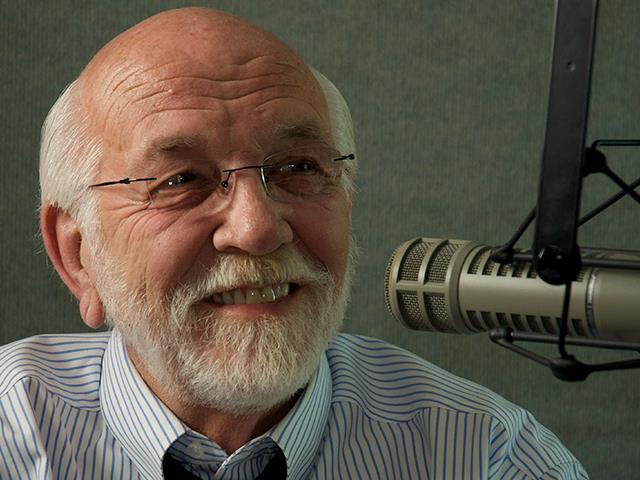
"God has invited us to HIS table, so who needs to be invited to YOURS?" This week, Steve and the gang speak with author Ian Simkins about reclaiming connection by following Jesus' example.
The post Ian Simkins | Every Table An Altar | Steve Brown, Etc. appeared first on Key Life.
Guest (Male): 54% of Americans say no one knows them well. How do we fix that? Let's talk about it with Ian Simkins on Steve Brown, Etc.
Guest (Female): He's an old white guy, an author, broadcaster, and seminary professor who's sick of religion. And he's brought friends. Please welcome Steve Brown, Etc.
Steve Brown: Hey, we're so glad you're here. You always have a place at the table. And if you were wondering, I'm Steve, the aforementioned old white guy. Matthew Porter, our executive producer, is here, of course. His kids run cross country, so he now wakes up at 4:30 AM every Saturday morning for track meets. Matthew, my new book is titled God's Not Mad At You. You may be the exception.
Matthew Porter: Feels like it sometimes.
Steve Brown: And our producer, Jeremy, is in the little glass booth, just back from a whirlwind music tour of Connecticut. I spent a week in Connecticut one night.
Jeremy: Careful.
Steve Brown: I know, I'm not even looking in Kathy's direction. Our one-man IT department, John Myers, is in his tech bunker. John says the new foldable iPhones will start at $2,000 a pop. It easily fits into your pocket because there's no money in your pocket anymore. Dr. George Bingham is the president of Key Life. And John, before you ask, George says the answer is no. You cannot expense a new iPhone to Key Life.
George Bingham: You can expense a portion of it. The first dollar is on Key Life.
Steve Brown: And Kathy Wyatt is, of course, the soft feminine side of the program from Connecticut. Last Saturday was Talk Like a Pirate Day. Do you know the difference between a pirate and a Calvinist? One talks funny, can be intimidating, and is obsessed with depravity. The other is a pirate.
Kathy Wyatt: What did that have to do with me?
Steve Brown: I don't know, I didn't write it. Ian Simkins is one of our favorite people. He serves as lead pastor of The Bridge Church just outside of Nashville, Tennessee. He previously co-wrote Three Strikes, You're Forgiven. And Ian's new book, which I would hold in my nicotine-stained fingers, except his publishers are cheap and didn't send us any of them, but anyway, the title of the new book is Every Table an Altar: Reclaiming Connection in a World of Division, Distraction, and Loneliness. It is time for this book. By the way, I quoted that statistic, and it's one that you quote in your book about 54% of Americans saying that nobody knows them well. I think that's way too low. I think that's higher than that. And by the way, Ian, I was rather shocked that this book started in a bar. I'm not even sure you're saved. Tell us how you started thinking about—I thought that was a cool story, the way you opened up. You were at Auburn or some university somewhere, and there's this old house. Pick it up from there and tell us.
Ian Simkins: Well, first off, you're not the first person to challenge my salvation, so I appreciate that. I feel like I'm among friends already. I was at Judson University outside Chicago, and a bunch of us had just barely graduated college. We were renting a house in downtown Elgin, and there was this unmarked building. We didn't even know what it was. We stopped by a bunch of times, and it never seemed to be open. We peered through the windows and were like, "I think it might be a bar." Finally, one day, we showed up, and it was actually open. We walked in, and it was one of those moments where, if there had been a record player, it would have scratched. It was like, "Who are these people? How did they land here?" My initial thought was we had to get out of there. We didn't belong. This guy ran up and introduced himself, greeted us, and then proceeded to introduce us to every single person in this bar. He told us a little bit of each of their stories. This man just knew deeply everybody that was there. We ended up spending a few hours there just hearing their stories and what made them tick and how they landed there. It was this really surprising but beautiful picture of community of people who actually knew each other's stories and what brought them there. I never forgot that encounter.
Steve Brown: And that's what this book is about, seeing each other, isn't it?
Ian Simkins: That's right. As everyone's talking about tech and AI and all this right now, as the internet becomes more and more artificial, more and more people are going to deeply crave what is human. I think we're going to see a massive uptick in the next five years for meaningful connection with real flesh and blood people. I think it's just the way that Jesus did it, and I think the church is primed for a return to that.
Steve Brown: I do too. In fact, it's not a coincidence that last Sunday, my pastor spoke on exactly this subject. I was thinking about how many sermons I'd heard on it over the years, and very few, frankly. But my pastor did, and then he quoted the Luke 7. I know you dip into Luke a good bit because Jesus was always eating and never on a diet and still thin. It was a miracle of being the Son of God. The rest of us can't do that. He quoted Luke 7 and the prostitute and how Jesus saw her and nobody else did and welcomed her, and the radical teaching that came from that. Then somebody else sent me an article, and I heard another sermon on it. Then your book, which is incredible. All of a sudden, I think that maybe this is a God thing, that God's saying to his people, "It's time. It's past time." Your book is going to be a guide for exactly that. Talk about the problem again. Just set it up, and I know you have more to say about it than what you did just in a couple of sentences. Talk to us about where we hurt.
Ian Simkins: When we moved to middle Tennessee about five and a half years ago, I had a mentor, a really wise guy. He said, "When you move down there, you're going to be really eager to make a bunch of changes and move and shake and all that. Can I encourage you to spend the first six months just really listening to people?" That ended up being really formative for me because I sat with people at dinner tables and coffee tables. It actually became the subtitle for the book. I kept hearing three themes emerge over and over again: division, distraction, and loneliness. The division piece is the entrenched tribalism, the "us versus them." Everybody's an enemy unless they look exactly like me. The distraction piece, I just heard countless people talk about how much they hate how often they're on their phone. They're missing their kids' childhood. They just feel like they don't know how to get out of this dopamine fry. Then the loneliness piece, I know none of this is unique to Middle Tennessee, but I just heard so many people articulate in various different ways, "I'm around people all the time, but I don't feel like anybody really knows me well." Those three pain points emerged for us as a church. How do we actually begin to speak to these things in a meaningful way that actually meets people where they're at? That's where the motif of the table started to emerge.
Steve Brown: Oh man. I don't know if anybody in our audience or any of you guys ever read Weldon Johnson's God's Trombones. It probably had some racist overtones, and the theology was so skewed it was hard to stop pointing out theological errors in it, but it was a moving piece. In one scene, God's—it's a poem—and God was sitting on a mountain that he just created, and he said, "I'm lonely. I'll make me a man." For those of us who are theological, God has no need, so you've got to correct that. But in fact, love does have to express itself, and we were created that way in the image of God. You guys have got to get this book and make it the center of a study in the small groups of your church. It is time. It's way time. The title: Every Table an Altar: Reclaiming Connection in a World of Division, Distraction, and Loneliness. We're going to take a break because this is hard work. And by the way, Ian, they are wrong and evil, and I'm right, so quit meddling.
Guest (Male): Whoa, this place is huge. Welcome to the Vault, your home for classic sermons from Steve from the '90s, the '80s, even all the way back to the early '70s. The Vault is a one-of-a-kind online experience where you can explore more than three decades of grace-filled messages. Get the details and check out our free audio sample at keylife.org/vault. That's keylife.org/vault.
Steve Brown: Hi, this is Steve Brown. In case you didn't know, one of the main reasons Key Life exists is to remind believers that God isn't mad at his children. Why am I telling you this? Because our weekly email, Key Life Connection, takes the best of the videos and articles and puts them right in your inbox. We'd love for you to try it. It's free. Go to keylife.org/subscribe. Thanks for joining us. We're talking to our friend, pastor and author Ian Simkins. His new book is out this week. It's an important and significant book. The title is Every Table an Altar: Reclaiming Connection in a World of Division, Distraction, and Loneliness.
Matthew Porter: Ian, I love the book and the title. It's one of those rare ones where you hear the title and you're like, "Yes." It's the right sentiment at the right time, that feeling of holy moments in the everyday stuff around us if we will see it, participate in it, and make it happen. Talking about the loneliness even around a lot of people, I flash back to early post-college. I was going to young adult things in a pretty big church. It always felt—there are tons of people everywhere and at the same time, there was not any kind of means of facilitating meeting people. It felt like one of those giant aquariums where you're like, "I can see all these people, but I can't reach them." A lot of times in that, somebody at the church would say, "Well, nobody reached out to me," and you're waiting for something. What would you say to somebody who is experiencing that? I feel like the impetus may need to be on them to try to make a connection if one's not being made on their behalf. Thoughts on that?
Ian Simkins: Totally. I would first say I have so much empathy and compassion for someone who feels that way because I've been on the receiving end of that, where you're around a million people and you don't think anybody actually knows you. It is one of the weird parts of my job as I've had a fair number of conversations with people who feel exactly that. I will say this, though: I think in a lot of ways we've treated hospitality like it's a personality trait, like, "I don't really have the gift of that, so I guess I'm off the hook." Part of what has been so challenging to me is, for the person who feels that way, make the courageous ask. That's not—I don't want to paint some flowery picture that every person you ask to meet for coffee is guaranteed to say yes and you're going to become best friends. It's a little cliché, but a very helpful rubric for me is that when meeting with people, focus more on being interested than being interesting. I often take all of this pressure of, "I hope they think I'm clever. I hope they think I'm funny." When we can lean in with genuine curiosity about another person, I think that's so often what is lacking from our online decorum. It's just everyone trying to prove a point back and forth and everyone's trying to dunk on everyone else. We almost have lost the art of what it means to be present with somebody else and show genuine curiosity in their life. There's a guy named David Augsburger who said, "Being listened to is so close to being loved that for the average person they are almost indistinguishable." I think that's such an important truth, especially in this cultural moment that we're in.
Steve Brown: Ian, that's just plain wise advice for everyone. You could take Jesus out of this book and write a motivational book on how to win friends and influence people and, of course, a significant, when you make a fortune, contribution to Key Life.
Jeremy: When you were talking about that, I have to say one of the great gifts of my wife, and she has many, is that she's such a good listener. She's intense. She prefers in a group of people to be with one person and has a way of just drawing them out. It is as you said, just that interest in what they're saying, follow-up questions, that kind of thing. It's nothing programmed; it really is just being interested in another person. Any further comments on that are fine, but I was interested in asking you just go through how you structured the book. It's almost a Bible study on portions of Luke with particular themes, but talk about how you put the book together.
Ian Simkins: When I first began reading about this, I grew up in the church. I've been going to church since I was six. I was homeschooled in the '80s, which is maybe the most Christian decade to be homeschooled. Part of our curriculum was reading the Bible cover to cover, and I had never pieced together how much time Jesus spends at tables. Not just at meals, by the way. The book is not a hospitality book. It's not a cookbook. It is, for me at least, trying to understand why did Jesus care about this particular piece of furniture so much? He offers encouragement. He calls people to repentance. He challenges religious leaders. He flips a few tables. Part of what I think is so compelling to me is I heard an author a couple months ago who said, "In the Gospel of Luke, Jesus is either at a meal, going to a meal, or leaving a meal, and if you read the Gospel of Luke and you don't get hungry, you're probably not reading it correctly." I was so intrigued by that because, in a lot of our Western church growth mindset, everything needs to be up and to the right, and does it scale? Jesus doesn't seem to be all that concerned with those types of metrics. He chooses a much slower, much more subtle, much more ordinary methodology. What I love about the table is that everybody has one. It might be a 20-foot table in a grand dining room; it might be something that folds and goes in your closet. We all have these ordinary spaces of encounter that I believe the kingdom of God is meant to break through in these mundane moments. Much of my life I've shot for the stars and wanted to do something grand. I think the crucible of formation is in the monotony of daily life. Most of us, most of our lives, are ordinary time, ordinary space, and yet I think we often miss what God wants to do in those spaces because we're just waiting for God to do the next big dramatic thing. I think the table is the perfect place for that type of encounter.
Steve Brown: That's true. And by the way, I've just been convicted. 54% of Americans say no one knows them well. I'm one of those Americans who doesn't want them to know me. I'd be happy if they would send me to a monastery if they'd let me take my wife, but they won't do that. I know, I repent. You didn't come on to condemn, but you did, and I feel condemned. So I'm going to go home and clean off the table from all of the stuff. I don't want to know them, but I've got to invite them there. Couldn't I meet them at a restaurant where there's a table?
Matthew Porter: You could do that.
Steve Brown: There's some truth in my kidding around, and I understand, and even before Ian wrote this book—the book doesn't help—I had these feelings. I had an elder in a church one time who said I was the only pastor he ever knew who didn't want to know his neighbors. But I'm better. Pretty soon I'll be entirely sanctified and won't be able to spend any time with you guys because perfection does not hang out with imperfection. Hey, thanks for joining us. We're talking to our friend, pastor and author Ian Simkins. You want to check up on him, go to iansimkins.com and on X, that's S-I-M-K-I-N-S, and on X and Instagram @iansimkins. Ian, you were telling us such a good story in the break. Sometimes the conversations, albeit salted with language we can't put on the program in the commercial breaks, lots of good stuff happens. Ian, you were telling us a story of a guy came up to you at church. Tell us that.
Ian Simkins: In Middle Tennessee, as a lot of you know, there's just a million transplants. The last five years have been wild for this particular area. I always try to hang in the lobby before and after every service. There was this guy that beelined it for me, and I thought he was mad. He had that kind of energy like, "Oh boy, I'm about to get sucker punched." He said, "Hey, I'm not a Christian." I was like, "Cool, nice to meet you." And he goes, "Seriously, I don't buy any of this." I go, "All right, man." But then he said, "I am brand new to town, and I know that I desperately need community." And then he said, "And you all seem normal. Can I keep coming back?" I was really encouraged by his honesty. He's like, "I don't want you to think that I'm into this religion thing, but I know that I desperately need friendship." I thought about that for weeks following. He didn't mention the music or the sermon or the programming. He's like, "You all just seem like people that I could actually spend time with. Can I keep coming back?" What an opportunity for the church right now.
Matthew Porter: And is that not literally, "They will know you by your love for each other"? You're like, that's it personified. This is the marketing program: loving each other.
Ian Simkins: Yes, exactly right.
Kathy Wyatt: Ian, in the book, you talk about the story of the prodigal son, and your explanation of that is a little radical. Would you share that a little bit with our audience?
Ian Simkins: I love that story. My wife didn't grow up in the church, and she just has this tenderness towards scripture and Jesus that is such a gift to me. I remember the first time she heard me preach the story of the prodigal son, she came up to me afterwards and she's like, "Did you know that story?" I was like, "Yeah, it's the most popular Bible story there is." And she was tearing up and she said, "You should just preach that every week." It was so moving to me, and so I've loved that story for a long time. In it, I talk about the "kezazah" ceremony that I didn't know about. It would be customary that for a prodigal to return, the people would meet him at the gate and they would shatter a jar in front of him and say, "In the same way this jar has been shattered, you have shattered your relationship in this community and you are not welcome here." Some commentators have asserted that was part of why the father ran to meet him when he saw his son a long way off. The father, which a dignified first-century Jew would never do, sprinted to meet his son so that he would know just how welcome back he was. The son tries to launch into his speech and the father cuts him off and says, "Let's throw a party." The real turn of the story is the older son, of which I'm often the most guilty, the one who didn't leave is outside the party, refuses to come in. The story ends with the father having a conversation with the older son. I thought, how interesting that this story really is about a father who goes after both types of sons: the one who leaves in rebellion, but also the one who's steeped in resentment, the one whose whole kind of piety is like, "I, you didn't do this for me. Why didn't you throw a party for me?" And that to me is maybe the most convicting part of the story, how much I can be the older brother in the story, upset at the kindness and grace and mercy that God shows to other people when I feel like, "Man, God, you haven't done what you owe me." That kind of turn has been a really helpful way for me to understand that story.
Steve Brown: Your wife's reaction to the prodigal son, having heard it for the first time, I find that very moving. I'm sure that was not the first nor the last time you'll preach on the prodigal son. I'm a lot older than you are, which means I've preached on it a thousand times. Every single time, even to people who know that story, it's moving and you can see tears all over the congregation, which says something about who we are and how we've been created and what God desires in our life. Well, the name of the book: Every Table an Altar: Reclaiming Connection in a World of Division, Distraction, and Loneliness. I think sometimes the most important thing we can do as Christians is to show and to see and to reach out to lonely people. I've always been on the outside. Now I'm on the inside, and I'm determined to look outside.
Guest (Male): Hello, this is Pastor Jerry Cuparys again, and I'd like to take a moment to ask you to pray for and give to Key Life. When you pray, ask for wisdom and blessings and that Key Life will continue to spread the message of God's grace for many, many years to come. And if you can give, please give as generous as you are able. And you know that we will be faithful with every gift, big or small. Thank you.
Guest (Male): When Christ promised we could live life to the full, he didn't just mean eventually in heaven because Jesus didn't come to save us from our humanity, but to restore it. Life with a capital L. Find it now on keylife.org/store.
Steve Brown: What if you could start your day by hanging out in God's word and with some of the most significant theologians, authors, and pastors ever? That's the idea behind the one-year devotional, God With Us. Find it now at keylife.org/store. That's keylife.org/store. Thanks for spending this time with us. By the way, if you haven't yet subscribed to the weekly Key Life email, you're missing out. All the cool kids do. So while you're thinking about it, go to keylife.org/subscribe. The cool thing about it is it's free. And the cool thing for us is you can't complain. Money back guarantee. Ian, you have a phrase in there, "presence over performance." Does that relate to the distraction part of the subtitle? What does that mean?
Ian Simkins: Something I realized in researching this that in a lot of ways it feels like we've conflated hospitality with entertaining. And I'm not knocking entertaining at all. I know plenty of people that they know how to make a cornucopia, whatever that is, or to lay out a beautiful charcuterie board. I think some people are truly gifted at doing that. A lot of us, myself included, have no interest in doing any of that. So in some ways we've equated the two and I'm like, "Well, if I'm not going to have a photo-ready gallery of a dining room, then I guess this isn't for me." Hospitality to me, in a biblical sense, is way more about meaningful gospel presence with somebody over me trying to impress them. I'm so compelled by the example of Jesus who touched lepers, who maybe hadn't been touched in years, who stoops down, who makes space for kids when his disciples saw them merely as a distraction. The phrase that I try to use at our church a lot is "presence is the medium of love." I don't know where we lost our way in that, but it does feel like the more and more digitized our culture becomes, the more our communities are longing for—because we've all probably had a cup of coffee with somebody where they're physically there, but they're still texting under the table. Or they're checking their Apple Watch. It should drive us nuts, but it's like, oh, you're physically there, but your mind's somewhere else. I feel like that's become so commonplace that people are longing for anything that looks like meaningful, "Are you actually with me in what it is that I'm sharing?" The gift of that is that all of us can do that. That doesn't require a seminary degree. That's in all of our power to be fully present with another person, and yet so often we're a million miles away because of our email or text message.
Steve Brown: I think there's an increasing awareness among my friends about what you just said and how shallow and empty it is. I think that's probably a good thing if that's happening. After a while, that stuff is dark and gets old and you don't have any place to go because there's no safety net of real people. People are beginning to see that.
Kathy Wyatt: You mentioned a minute ago hospitality, and I have always been somebody who really likes to entertain. I've always seen the hospitality part as you just get people together, you have dinner, and you do a really nice dinner and you do really nice silverware and all that kind of stuff, and that's really great and you're entertaining people and hooray for me. But it is different, that and part of what you're talking about. I just recently, I don't know why I did it, must have been God, agreed to be part of what started out to be the welcome team at the church, where you stand at the door and greet people. Who can't do that? Put somewhat of a smile on your face and shake people's hands. But it's changed my whole outlook on engaging with people. More than just, "Hi, nice to have you here this morning, welcome." Conversations have started to get longer as I see people that I'm beginning to get to know. And then as a result of that, I volunteered for something else. On Sunday, there was a new family at the church: a woman with five children, decidedly about to deliver another one. It was the first time they had been at the church. Because there were kids involved, I made a point to go and speak, and they were just precious children. Low and behold, they turned up at the same restaurant where a friend and I were afterwards, and I said, "Okay, God, I'm going to do more than just say hi, nice to have you with us this week." I sat down there, and I spent probably 35 minutes with this family and these kids. For me, it was so enjoyable, but I realized that the time spent, just that little bit of time, that is the beginning of something with this particular family that would never have happened before. It is easier than what you think because I don't necessarily think of myself as a gregarious kind of person. But it was just amazing.
Steve Brown: Kathy is an incredible illustration of some of the things you're talking about. I can't tell you how many times with how many people we've been at her table. That's been a place of depth, profound conversation, and caring that took place.
Ian Simkins: That's a beautiful distinction because the Greek of the word hospitality is "philoxenia." It's two words: love and strangers. The love of the stranger. It is the welcome of the person that perhaps the rest of society says no, thank you to. To create the space for someone to know and be known is, I think—I can't think of a time in my life where there's been a greater need for that particular posture towards the rest of the world.
Steve Brown: Ian, we're out of time. If you can say something profound in 30 seconds and life-changing. Or maybe you could have an invitation to receive Christ or something.
Ian Simkins: It'll be so quick. My encouragement would be God has invited us first to his table, so who needs to be invited to yours? That's the framing of the whole thing.
Steve Brown: Ian, thank you. I know how busy a pastor is and then when you write a book, it just can become overwhelming. So we owe you not only for a great book, but for spending the time with us. You keep writing, we'll keep being hospitable. The name of the book and the author's name is Ian Simkins, Every Table an Altar: Reclaiming Connection in a World of Division, Distraction, and Loneliness. We're going to come back next week, and we'll tell you who we're going to do it to next week.
Guest (Male): Believer, I want you to remember that where sin abounds, grace does much more abound. And you will run out of sin before God runs out of grace. Grace, the real good news of the gospel. Find it now on keylife.org/store.
Steve Brown: A number of years ago, I was the pastor of a church. After a Wednesday evening service, and generally I stayed in my study until everybody left, I came out and this young lady was talking to a young man. She said, "Pastor, would you come over here for a moment?" I walked over, and she said, "This is Jimmy, and he says nobody spoke to him. I told him that we don't come here to be spoken to; we come here to be taught. That was right, right?" I don't remember what I said, but I remember wincing and I remember driving home that evening and thinking, "Oh, that's not right. There's something wrong, and it's really wrong." A month later, I was preaching at a large church in Atlanta, and I told them about that incident. I said, "I'm not really proud of that, and I want you to pray for me. There are millions of people going to hell, and I don't care. I don't know their names, I don't want to know their names, I don't know their children's names, and there's something so unchristian and wrong about that. If you would, pray for me." And they did. They began to pray, and God began to do things in me. Now I'm really different. Not wonderful or spiritual or more faithful or obedient, but I'm different. I've gotten people on my heart, and I can cry for the lost and I can cry for the strangers and I can make jokes about not caring because I know and God knows that I really do care. So when I listen to something that's going on in this church in Nashville that Ian talks about, I want to stand up and shout, "Speak in tongues! That's it! That's important! That's really important, maybe even more important, but I have to think about this, than doctrine." Next week, we're having an Ortland. You know, there's just a whole bunch of them. They grow everywhere. We've had Ray, who's the dad, a number of times, and the boys Dane and Gavin. We just love this family. We've even had the mother/wife on the program too, Jani. Anyway, Gavin has a new book out called Why Christianity Makes Sense. So hopefully it'll be Gavin that shows up, but you never know. It could be somebody else that's an Ortland. You shouldn't miss it. Just find out which one's going to show. It'll be worth the effort. And between now and then, don't do anything we wouldn't, and that gives you a wide berth. Not a white white berth, just a wide berth. Why are you laughing? I didn't say white. Why are you looking—I see your eyes.
Related Episodes
Matthew Loftus | Resisting Therapy Culture | Steve Brown, Etc.
Sunday, October 4
Steve Brown | God’s Not Mad At You | Steve Brown, Etc.
Sunday, September 20
Toni Kim | Shame Redeemed | Steve Brown, Etc.
Sunday, September 13
About Steve Brown, Etc.
A weekly talk show featuring Steve and “the rest.”Key Life exists to communicate that the deepest message of the ministry of Jesus and the Bible is the radical grace of God to sinners and sufferers.
Because life is hard for everyone, grace is for all of us. And grace means that because of what Jesus has done, when you run to him, God’s not mad at you.
All of the radio shows, sermons, books, and videos we produce work together toward one mission: to get you and those you love Home with radical freedom, infectious joy and surprising faithfulness to Christ as your crowning achievement.
Learn more: http://www.keylife.org
About Steve Brown
He’s not your mother and he’s not your guru. He’s Steve Brown - a speaker, author, former pastor and seminary professor, and founder of Key Life Network, Inc.At Key Life, Steve serves as Bible teacher on the radio program Key Life and the host of the talk show Steve Brown, Etc. Prior to Key Life, Steve served as a pastor for more than thirty years and continues speaking extensively.
Steve has also authored numerous books, including How to Talk So People Will Listen, Three Free Sins, Hidden Agendas and his latest release, Talk the Walk: How to Be Right Without Being Insufferable (now available as an audiobook).
Contact Steve Brown, Etc. with Steve Brown
Key Life Network
P.O. Box 5000
Maitland, FL 32794
In Canada, send requests to:
Key Life Canada
P.O. Box 28060
Waterloo, Ontario N2L 6J8
1-800-KEY-LIFE (1-800-539-5433)


