Standing Firm in the Grace of God (Part 1 of 2)
Ministries > Truth For Life with Alistair Begg
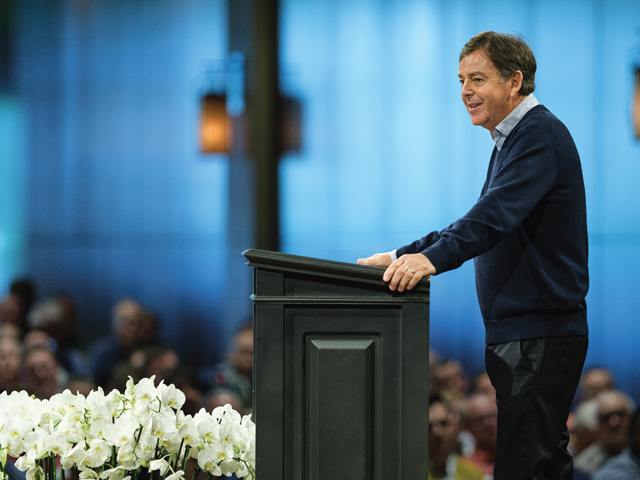
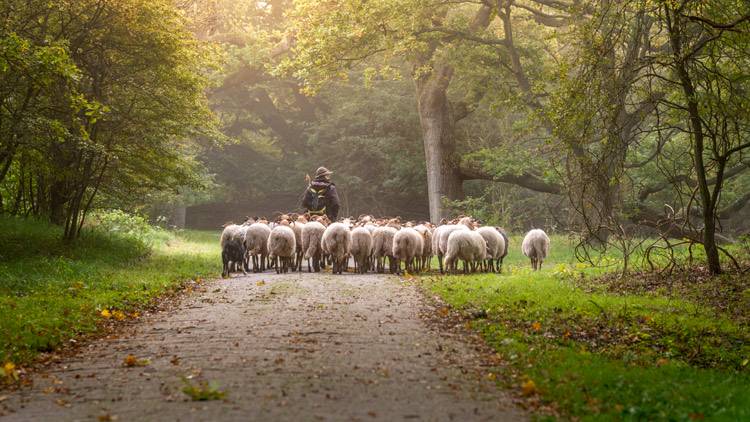 Jesus commanded Peter to “shepherd the flock of God.” This privilege and responsibility has been passed down to church elders. Learn what’s involved and what characteristic all church leaders should cultivate. Listen to Truth For Life with Alistair Begg.
-----------------------------------------
• Click here and look for "FROM THE SERMON" to stream or read the full message.
• This program is part of the series ‘The Stranger’s Hope’
• Learn more about our current resource, request your copy with a donation of any amount.
Helpful Resources
- Learn about God's salvation plan
- Read our most recent articles
- Subscribe to our daily devotional
Follow Us
YouTube | Instagram | Facebook | X
This listener-funded program features the clear, relevant Bible teaching of Alistair Begg. Today’s program and nearly 3,000 messages can be streamed and shared for free at tfl.org thanks to the generous giving from monthly donors called Truthpartners. Learn more about this Gospel-sharing team or become one today. Thanks for listening to Truth For Life!
Announcer: Jesus commanded the Apostle Peter to shepherd the flock of God. That's a privilege and a responsibility that has been passed down to pastors and elders, but it's not without its challenges. And today on Truth For Life, Alistair Begg looks at what shepherding the church involves, and he highlights an essential characteristic that all church leaders should cultivate.
Alistair Begg: We turn to your Word, gracious God. Your Word is a lamp to our feet, a light to our path, food for our souls, a map for our journey, everything that we need for life and for godliness. And we thank you for the privilege of being students of it, and we pray that the Spirit of God will illumine it to our hearts and lives as we study now, and we pray in Christ's name. Amen. In 1945, some of you were around, I wasn't. In 1945, the Church of England, their Commission on Evangelism, produced a plan dedicated to the memory of Archbishop William Temple. The plan was entitled Toward the Conversion of England. It drew attention in its conclusion to leadership, saying, "Conditions vary from parish to parish, the determining factor being, apparently, the personality of the incumbent. More particularly is this the case in villages, where a spiritual leader can often make an astonishing difference. Now, we can make of that what we wish, and certainly much has changed in the ensuing eighty years. But one thing that has never changed is the strategic necessity for godly and useful leadership in the company of God’s people. we read through the pages of Scripture, and we rehearse church history, to remind ourselves without question that the church of Jesus Christ does not advance beyond the spiritual progress of its leaders. And Peter understands that perfectly, for all kinds of reasons and coming out of all sorts of situations. So it’s no surprise that as he begins to wrap his letter up, here in the first verse, so he says. So he says. In light of all that I have written, he might have said, allow me to exhort particularly the elders among you. The word there for exhort in classical Greek is used of encouraging troops to go into battle. When Paul uses the same terminology in Romans 12, he does so on the basis of his apostolic authority. Peter has introduced himself at the beginning of the letter as an apostle, but you will notice here that his appeal is not as an apostle, but as a fellow elder. So I exhort the elders among you as a fellow elder. Now, when we read the Acts of the Apostles, we realize that they went around, they proclaimed the gospel, they made disciples, and before they left, they brought the newfound congregations together underneath the leadership, as God intended, and they appointed elders in the church. Those leaders in the church were the ones who were supposed to feed the flock and lead the flock. they are those who are keeping watch over your souls, so not only to feed and to lead, but to watch and to warn. And they watch over the souls of those under their care as those who must give an account. That's Hebrews 13. So he says, I appeal to you not only as a fellow elder, but also as a witness of the suffering of Christ, as well as a partaker in the glory that is going to be revealed. We can stop on this. It's an interesting question for you over coffee. In what sense was he a witness of the sufferings of Christ? But that's for you and not for me right now. All I want to point out is that he is never far from this theme that runs through: suffering and glory, a cross before a crown. And as he began in chapter 1, he is reinforcing it here. Somewhere along the line, of course, in the journey of Peter’s own pilgrimage, there was a big change, because you will recall that when Jesus is explaining to his disciples that he is going to go up to Jerusalem, he will suffer at the hands of cruel men, and he will die, we're told that Peter took him aside. He took him aside, "Lord, this shall never happen to you. There's not going to be suffering for you, Lord Jesus." And he was still on at that when, in the arrest in the garden of Gethsemane, he is the one who reaches for his sword. He is still seeking to prevent the very thing that is for which Christ has come. But, of course, we know that the resurrection changes things, the outpouring of the Holy Spirit changes things, and it is in that established understanding that he now takes up the privilege of doing what Jesus told him he needed to do: feed his lambs and tend my sheep. And he's going to do so as one who is partaking ultimately in a glory that will be revealed as he walks the pathway of suffering. Now, let's just pick up in verse 2 with the clear exhortation: "Shepherd the flock of God." In the King James Version, it says, "Feed the flock of God,” which, of course, makes perfect sense, because shepherds are responsible for leading the sheep into pasture. My grandfather on my father’s side was a shepherd in the highlands of Scotland, way up in the north of Caithness. I never had the privilege of meeting him, but I do have a crook that he used, and I keep it, and every so often I say to myself, “I wonder how many little lambs he managed to pull off the cliffs of Thurso and how many unruly creatures he rapped on the nose with the end of a stick. He was a shepherd. The feeding of the people of God, or the shepherding of the people of God, is a picture, of course, which is at the very heart of things. I met a young man from Scotland this morning, and it's always good to meet a native, and we didn't have a long time to talk, but depending on the background out of which he's come, he might have been, like me, able, even as a boy, to recite the Twenty-third Psalm. The Twenty-third Psalm, sung to the tune of Crimond, is known, actually, off by heart. It's almost like the national anthem of Scotland before they took on the other national anthem which they sing at the rugby matches. But the Twenty-third Psalm, I mention it because it is a description of the Shepherd and the Overseer of our souls. Who embodies the Twenty-third Psalm more than the Lord Jesus himself? And so, for your homework, you can ponder how taking up the exhortation of shepherding the flock among you, or shepherding the flock that is among you, can be understood in terms of the twenty-third Psalm. The provision of nourishment. He leads us in paths of righteousness. The benefit of restoration. The elders of the church have in view the well-being of those under their care, making sure that they are provided for, that they are restored, that they are consoled. You provide comfort for me, that they are protected. You prepare a table before me in the presence of the enemies, and you provide, ultimately, a destination to which we move. The picture of the Twenty-third Psalm I find helpful, and I find at the same time challenging. Is that something of what Peter might have in mind when he says, “This is what you are to do: Shepherd the flock of God”? It's interesting, isn't it, that it says, “That is among you.” That's actually why I stumbled over it, because I was thinking about it. “That is among you.” He doesn't say, Shepherd the flock of God that you are among. Now, yesterday I got invited to a birthday party. I never saw so many people from one family in one place. It didn't help that we all had to wear ridiculous party hats, but when we finally took the picture and I reflected on it, I said, I'm not so sure that I was part of them, but I was among them. They were everywhere. And sheep are like that. That's what happens when you're in a church. They're among you. They're like your grandchildren. Could you just get out from underneath me here, please? I'm not sure that I want to be among you in quite this way. But we are. Exercising guidance and exercising oversight, Providing the Word of God as we're given the privilege of teaching it. Who is it that we're giving to them as we feed them? We're giving to them Jesus. We're not just finding the way the Old Testament is finally revealed in Jesus, as if it was some kind of mechanism, like a find the answer to the question. Young pastors, you can find the answer to that question, and yet we can fail to give our congregation Jesus. Did you offer Jesus to them, would be the question of the Puritans. And fascinatingly, John Stott, in his book The Incomparable Christ, makes this statement in relationship to Scripture: The Bible will give Christ to you in an intimacy so close that he would be less visible to you if he stood before your eyes. Well, we can unpack that, I think. Jesus, the bread of life, the living water. I think it's quite ironic that we had so much rain, and then we have no water. And, what, never thirst again? No, never thirst again. I gotta change that to what? Never shower again? No, never shower again. I'm glad of this sweatshirt. It covers a multitude of sins. Well, how is this exercising of oversight to be done? Well, it's to be done as the text says. It's a privileged responsibility to be entrusted with sheep. And the challenges of it are known to all who enjoy the responsibility. That which is immediately observable is not necessarily representative of the hidden battles that are involved in being entrusted with the privilege of leadership. The peculiar challenges of dealing with the advance of the powers of darkness, the unrepeatable and yet enormously unseen demands of exercising oversight. Reminder, little mark in the margin: “I should pray for my vicar a little more than I do.” Also, if you were to ask, “Why do you do what you do?” hopefully the answer would be on the right side of this equation here. Not by compulsion. Not by compulsion, but with a genuine sense of willingness. Not a grudging, reluctant responsibility. Not becoming jaded, not becoming whatever it might be. Not by compulsion. Not for shameful gain. Filthy lucre in the King James Version, and everything that goes along with that, the dangers that are attached to it. That's not, he says, if you're going to exercise your leadership, it better not be ruled by that. And certainly, in verse 3, I hope you're not exercising it in order that you might be able to rule the roost. Rule the roost, domineering over those in your charge. The sheep are God’s sheep. The flock is God’s flock. The elder has the privilege of participating. And the best that we can do is be examples to the flock. And as we do, keep our eyes on the prize. Verse 4: “And when the chief shepherd appears,” he will appear, “you will receive the unfading crown of glory. The picture here often, and I think in the second letter particularly, at the background in many of these things is the prizes that would be awarded in athletic competitions. And the amaranth flower was often used, apparently, because of the way it kept its bloom over a fairly long period of time, as opposed to other flowers that might fade quickly. There is a, Peter, I think, is onto this in a particular way, because in his second letter, when he's doing much the same thing, and he's saying, add to your faith goodness and so on, and he then says, you see, he holds out this thing, the shepherd is going to appear, and this is what's going to happen. The day will dawn when you will pass through the entry into heaven, he says, and in this way you will be richly provided, there will be richly provided for you an entrance into the eternal kingdom of our Lord and Savior Jesus Christ. Actually, in the King James Version, I think it's better, because it says, and you will receive an abundant entrance. An abundant entrance. The picture is of a returning athlete who goes back to the city, and instead of having her or him brought through the normal gates of the city, they broke down a partition in the wall, garlanded it, and then it was through that portico that the triumph was then revealed and enjoyed. When all my labors and trials are o'er, and I am safe on that beautiful shore, just to be with the dear Lord I adore, will through the ages be glory for me. Challenges now, finishing then in the way in which we've been singing this morning. We've sung very much, and I imagine that these people, they think very carefully, they read their Bibles. It's been wonderful. It's been wonderful. And again, and as we sang this morning, it made me think of the Queen's funeral. You say, well, thank you for sharing that. But no, she had three hymns. See, she preached from the grave, I believe. The first one was The Day Thou Gavest, Lord, is Endeth. It was sung at Queen Victoria's funeral. It was sung at the transition of Hong Kong from British rule to Hong Kong. How does it finish? So be it, Lord, thy throne shall never, like earth's proud empires, pass away. Your kingdom stands and grows forever, till all your creatures on your sway. Wow, do you think she thought that out? Yeah. The day thou gavest, Lord, is ended. The twenty-third Psalm and love divine, all loves excelling. Finish then thy new creation, pure and spotless let it be. Let us see thy great salvation perfectly restored in thee, changed from glory into glory, till in heaven we take our place. Get this? Till we cast our crowns before thee, lost in wonder, love, and praise. You see, there was only one person to whom the queen referred to as your majesty. That's what Peter is saying here. Make sure your exercise of leadership is as God intended and as Jesus exemplified. And since the elders are to fulfill their calling in a spirit of submission to God, the active practice of humility is a garment to be worn, verse 5. Clothe yourselves, all of you. All of you. The exhortation isn't not to feel humble. No, the picture of humility is a Jesus picture again, isn't it? It's John 13. It's tying on the apron when his fellows see there is no particular interest that any one of them has in dealing with the feet of his friend. And Jesus ties that, the incumboma, he ties it around his waist, and then he washes the feet of his disciples. He washes the feet of the betrayer. He washes the feet of the denier. He washes the feet of each of them who, in short order would be locked in a room for fear that they might end up as their master was ending up. It's a problem, pride, isn't it? There should be a yes from that. So people are nudging their husbands. Come on, you know that. Tillich, whom I don't want to really quote, said, “Every day, in a thousand ways, we seek to make ourselves the center of the universe.” And that's a real problem, because we're not the center of the universe. We aren't even the center of our own little universe. And when that begins to take hold in leadership in a church and begins to permeate the flavor of the church, it is a real danger, because friendships are broken, family ties are strained, fellowship is destroyed. Because humility is about serving rather than being served. It’s about giving rather than taking. It’s about responding versus commanding. It’s about fitting into the plans of others, not demanding that they fit into ours. I hope I'm getting better at this. I don't know. I got an illustration as I stand here, because given my druthers, I always like to read my own scripture reading, because it gives me a sense of whether I have a voice or whether I don't. It was very clear to me that I wasn't going to read my own scripture reading. So a little thing inside me says, well, wait a minute. And then the other thing inside me said, “Shut up, it's not your program.” And for me, that's a tiny advance. It may not seem much to you, but I'm taking some encouragement in it. God sets himself against the haughty and the arrogant. He brings down the mighty from their thrones, the Magnificat. And the final phrase of verse 6 in relationship to this is actually not a motivation, I don't believe. It's an explanation. Humble yourselves therefore under the mighty hand of God, so that at the proper time he may exalt you. It's not try and do this, and maybe that'll happen. It is straightforward. God lives in the high and the holy place, but also with the one who is contrite and lowly in spirit. This is the one to whom I will look, says the Lord, Isaiah 66:2, he who is humble and contrite in spirit and trembles at my word. Think what it meant for Peter to write this. Jesus, I can't speak for everybody else, but I can speak for myself. Even if they all bail on you, you can count on me. I'll be with you right to the end. Humble yourselves. Humble yourselves.
Announcer: You're listening to a message titled Standing Firm in the Grace of God on Truth For Life with Alistair Begg. We'll hear the conclusion tomorrow. In the meantime, with Christmas just around the corner, we want to encourage you this year to give gifts that point people to Jesus. And to make this easy and affordable for you, we've put together a collection of high quality, low cost, gospel centered books in our online store. You'll find it at truthforlife.org/gifts. There you will find books that make meaningful gifts for everyone on your list, including a Bible bound in rich brown leather. There's a prayer book inspired by the prayers of the Puritans, and a handbook that guides you throughout the New Testament to enrich your Bible study. If you're shopping for gifts for children, we have two book bundles. First, there's Alistair's popular books J is for Jesus and C is for Christian. These colorful hardback books teach truths about Jesus' character and what it means to be a Christian. You can purchase this two-book pack for just 12 dollars. Our second book bundle is for children ages 7 and older. It's titled God's Very Special Letters, Epistles for Kids. These books provide kid-friendly translations of 1st Peter and Philippians, letters that provide biblical wisdom about loving others, handling trials, and standing firm in the faith. You get these two books for just $10. These books and more can be found in our online gift store while supplies last, and at these incredibly low prices, they won't last long. So shop today. Go to truthforlife.org/gifts. And when you're done shopping, please remember to add a donation at checkout to support the ongoing Bible teaching of Truth For Life. When you do, we'll say thanks by offering today's recommended book, The Incarnation in the Gospels. It's a great book to read as you prepare to celebrate Christmas. By the way, if you're in pastoral ministry or church leadership, it's not too early to put Basics Chicago on your calendar. This conference that's designed to encourage men in ministry takes place May 18th through the 20th, 2027 at Moody Bible Institute in Chicago. Join Alistair and special guests Crawford Loritz and H. B. Charles for a time of renewal, fellowship, and learning from God's word. Learn more at basicsconference.org. Thanks for listening today. Do you know where to find security when you're battling anxiety or adversity? Join us tomorrow to find the answer. The Bible teaching of Alistair Begg is furnished by Truth For Life, where the learning is for living.
Related Episodes
Standing Firm in the Grace of God (Part 2 of 2)
Wednesday, November 25
Stewards of God’s Varied Grace (Part 2 of 2)
Monday, November 23
Elizabeth and Zechariah (Part 2 of 2)
Saturday, November 21
About Truth For Life
Truth For Life distributes the unique, expositional Bible teaching of Alistair Begg. Studying God’s Word each day, verse by verse, is the hallmark of this ministry. In a desire to share the good news of the Gospel without cost as a barrier, the entire teaching archive is available for free download and resources are available at cost with no markup.
About Alistair Begg
Alistair Begg has been in pastoral ministry since 1975. Following graduation from The London School of Theology, he served eight years in Scotland at both Charlotte Chapel in Edinburgh and Hamilton Baptist Church. In 1983, he became the senior pastor at Parkside Church near Cleveland, Ohio. He has written several books and is heard daily and weekly on the radio program, Truth For Life. The teaching on Truth For Life stems from the week by week Bible teaching at Parkside Church. He and his wife, Susan, were married in 1975 and they have three grown children.Contact Truth For Life with Alistair Begg
Website
http://www.truthforlife.org/?utm_source=oneplace&utm_medium=sitelinks&utm_campaign=home
Mailing Address
Truth For Life
P.O. Box 398000
Cleveland OH 44139
Telephone (Customer Service)
888-588-7884 Domestic
400-543-6800 International
440-543-0522 ( Fax)