The Coming of the Lord (Part 5 of 6)
Ministries > Truth For Life with Alistair Begg
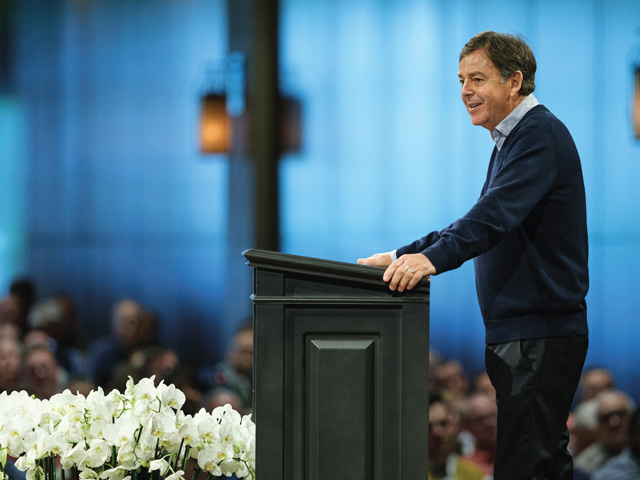
 Are you a Christian? How does your life give evidence of this new identity? Listen to Truth For Life as Alistair Begg teaches what it means to be a Christian, how God enables us to persevere, and why this significantly changes our view of Christ’s return.
-----------------------------------------
• Click here and look for "FROM THE SERMON" to stream or read the full message.
• This program is part of the series A Study in 1 Thessalonians, Volume 2’
• Learn more about our current resource, request your copy with a donation of any amount.
• If you struggle to pray because your mind drifts, you don't know what to say, or you even question if God is listening and able to answer, transform your prayer life by learning to pray like the apostle Paul! ‘Download the free audiobook Pray Big by Alistair Begg.’
Helpful Resources
- Learn about God's salvation plan
- Read our most recent articles
- Subscribe to our daily devotional
Follow Us
YouTube | Instagram | Facebook | X
This listener-funded program features the clear, relevant Bible teaching of Alistair Begg. Today’s program and nearly 3,000 messages can be streamed and shared for free at tfl.org thanks to the generous giving from monthly donors called Truthpartners. Learn more about this Gospel-sharing team or become one today. Thanks for listening to Truth For Life!
Host (Male): Are you a Christian? Does your life give evidence of your new identity? Today on Truth For Life, Alistair Begg helps us work through what it means to be a Christian, how God enables us to persevere, and why this significantly changes the way we see the return of Christ.
Alistair Begg: Now if your Bible is still open to 1 Thessalonians 5, you're at the right spot, and we're going to pick things up where we left off last time. The subject matter which is under consideration by Paul at this stage in his letter is the issue of the coming of the Lord Jesus Christ. He has been encouraging the believers in Thessalonica not simply to look back to what Christ has accomplished on the cross, not simply to look around to the evidences of His grace within their lives, but to be clearly looking forward to the fact that this same Jesus is coming again. And in the opening verses of chapter 5, he sets aside their potential preoccupations with times and dates and encourages us not to get off on the wrong foot in relationship to the matter of curiosity. My secretary unearthed for me during the week an illustration that I'd had in my files and overlooked concerning this whole periphery that has continued to surround the issue of the clear instruction of the Word of God. This was an advertisement that I had pulled from The Times in London, and those of you who are close enough will be able to see that it bears the banner heading, "The Christ is Now Here." It goes on to tell us how we'll be able to identify him, that he won't be a religious figure, that he will be a teacher, he will be an educator, and so on. Then it comes finally to the question, "And when will we see him?" To which the answer is given: "He has not as yet declared his true status, and his location is known to only a very few disciples." That's always a very helpful way to approach it. This is from The Times of Saturday, April 24, 1982. The aging yellow on the page is a tribute to the ludicrous nature of what was declared at tremendous expense. I mentioned it last time. I want to reinforce it for you: if you want to chase mice all under the chair in relationship to these things, then go ahead and do it. But please don't encourage everybody else to come scurrying under the chairs with you. Allow them simply to look forward to seeing the King. The matter of curiosity was then considered in light of the fact of our identity. We went to that in verses 4 and 5. And we saw Paul's clear emphasis in relationship to the fact that these people were no longer what they once were. To become a Christian is actually to be totally revolutionized as a result of the impact of the power of God through the Spirit of God by the Word of God. These people had been made radically new, and he says to them, "Brothers, you are not in darkness so that this day should surprise you like a thief. Instead, you are all sons of the light and sons of the day." One of the fascinating things to do is to take the New Testament and go through it asking the question, "How many different ways is a Christian designated in the New Testament? How many different ways are there of saying a person is a Christian?" Here we come to one of them. Paul uses this picture in other places. In Ephesians 5:8, for example, he says to his readers, "You were once darkness, but now you are light in the Lord. Live as children of the light." We do not belong to the darkness, verse 5. We are not what we once were. We belong, he says in verse 8, to the day. The point is that our identity provides the basis for the activity in which we engage. He says if you belong to the day, then your behavior should be daytime behavior. There are certain things, he says, that go on at night. There are certain features of darkness. That was your previous existence, he said, but God in His grace has opened chapter two to you. And now, he says, you are not to be those who are living half-asleep. You should not be living in your pajamas. Instead, you should be marked by being children of the day. Once he has laid this out, the progression of his argument is very clear, as you will notice by just a simple reading of the text. He starts in verse 8 and says, since this is true concerning who we are, then this is what we are to do. For, he says, this is what God has done. Therefore, he says in verse 11, here are the practical implications. If you can see that simple progression in the text before you, then it will allow you to trace a line through it, and I will try and follow along the same line to help you as we go. First of all then, he says in verse 8, since we belong to the day, a number of things should be happening. There are three he delineates. The first of which is we should be staying awake. Verse 6, he had said the same thing: we're not like the others who are asleep; instead, let us be alert and let us be self-controlled. In other words, the Christian is the person who, amongst other things, has their wits about them. They are alert to the challenges, opportunities, struggles, and responsibilities of the day. And the primary emphasis here in 1 Thessalonians 5, and indeed throughout the whole of the New Testament, is that the call to alertness, the call to self-control, the call to set aside dreaminess and carelessness, is primarily a moral and a theological call. In other words, it is imperative that we are not falling foul of immoral pursuits as a result of not staying awake, and it is very, very important that we're not hoodwinked by all kinds of crazy ideas because we're living half-asleep. When you're half-asleep, a number of things are possible. Danger lurks nearby for those who are half-asleep. Certainly, that is true when you're driving your car. When you first go off to college or whatever it is, your parents are always telling you, "Would you please call every 20 minutes? Because we want to know that you're safe, and we want to know that you haven't fallen asleep at the wheel and imperiled yourself." In the same way, those of you who have responsibilities for the care of others know how important it is that you are awake and not asleep. The nurse in the middle of the night who is caring for people in the intensive care unit of a hospital needs to make sure that he or she is well awake so that they may read the charts, so that they may observe the signs, and so that they may produce the medication in the right doses at the right times. We don't want the people there half-asleep. It's dangerous to have them half-asleep. Flying this week to San Antonio, the flight was late out to Chicago by an hour. I asked the girl, one of the stewardesses, "What's the problem? Was it the weather last night?" "No," she said, "the pilot's asleep." "Oh," I said, "that's good." She said, "You're right, it's good. We like them well-rested." And the fact of the matter was that they needed to meet the legal requirements of rest before they took the throne once again and zoomed off into the great blue yonder. We understand that because to be half-asleep represents danger. Peter, writing on the same thing, 1 Peter 5:8, says, "Be self-controlled and alert, because your enemy the devil is going around like a roaring lion seeking those he may devour." Peter had learned his lesson eventually, but in the Garden of Gethsemane, along with the other disciples, he failed to learn the lesson. Jesus said, "Watch and pray that you do not enter into temptation." They neither watched nor did they pray, and they fell right into it. First then, it is imperative that we stay awake, because when we're half-asleep there is potential for danger. Also, when we're half-asleep, we don't give attention to the things that deserve attention, and we don't give attention that is deserved. The church in Ephesus was warned of this when Paul took his leave of them. You can read it in Acts 20. He says to the elders there, "I want you to watch yourselves and watch the church. I want you to make sure that you're really paying attention because if you don't, then you will find that all kinds of things will creep up on you." And it is when we're half-asleep that we may be compromised. Have you ever fallen asleep on the couch and awakened to find that somebody has done something to you? Put something on your head, or tied something to you, or tied your shoelaces together, or whatever else it was. How did they possibly manage to do so? Because we were half-asleep. If we had been alert, they would not have managed to pull it off. Now what Paul is saying is very clear: "Here you are, believers. You have been made children of the day. It is right for me to anticipate that you will then be marked by daytime activities, and I want you to make sure that you stay awake." Secondly, he says, it is imperative that you guard your heart. Where does this come from? "Let us be self-controlled next, putting on faith and love as a breastplate." The picture here is of the Christian armor. We don't quite know how Paul makes it to this metaphor, except to say that the issue of being alert probably triggered in his mind the question of a sentry. Because the responsibility of a sentry on guard is to make sure that even if the whole city falls asleep, he doesn't fall asleep. He is the one to be alert. And maybe that's the progression in Paul's mind. As soon as he starts to think about being alert, he then moves immediately to the picture of the soldier on guard, and so he says, "By the way, make sure you've got your breastplate on. Make sure that you are guarding your heart." In Ephesians 6, he uses the picture of a breastplate in terms of righteousness. Here, he figures it in relationship to faith and love. Reminding us that the metaphor may be used in a variety of different ways, and he felt free to apply it in whatsoever way he determined. But the issue is clear. How are we then going to guard our hearts? Well, he says, you guard them in relationship to faith and in relationship to love. What is this faith to which he refers? Well, it is the faith that believes in the promises of God. It is the faith which receives the forgiveness of God, and it is the faith which lives life in relationship to those two truths. How are we going to go out and face the issues of our day in a world that is increasingly preoccupied with syncretistic and pluralistic religious experience, that is increasingly disenchanted with science and with secular humanistic thought? Indeed, probably within a few years, the great issue will not be science against Christianity or humanism against Christianity, but it will be spiritism against Christianity. It will be two rival forms of spirituality. And how, then, is the Christian going to be able to articulate what they believe? How, then, is the believer going to be able to say, "Well, you know, I believe in God" in a way that sets it apart from someone who says, "So what else is new?" How are we going to be able to speak concerning the issues of the faith and of truth in a way that delineates it and sets it apart as distinct? The answer is we are not, unless we ensure that we are taking to ourselves this breastplate, believing in God's promises, trusting in God's forgiveness, and behaving life in relationship to the two. Also, the love of which he speaks, which is a constituent part of the breastplate, is not some kind of vapid sentimentalism. But rather, it is our response to the love which God has shown us in the Lord Jesus Christ, and that love will be displayed in relationship to one another. Also, what is a Christian? Well, a Christian is someone who is awake, and a Christian is someone who is preoccupied with faith and love. He is seeking, she is seeking, to guard his or her heart. Then thirdly, you will notice that we are not only to stay awake and guard our heart, but we are to keep our heads. That's the whole point of the helmet: the hope of salvation as a helmet. Doesn't it scare you to see people screeching down the freeway on motorbikes without helmets? Doesn't it make the hair stand up on the back of your neck as you just think for a moment of the implications of falling off that thing at 60 or 70 or 80 miles an hour and landing on your head? It's not a pretty thought, and it's not a pretty sight if you've ever seen the end result of it. The helmet may not be particularly attractive. It may not allow you to look cool. It may not make you feel the way you want to feel on your bike, but it's really, really important. And there is a great temptation, it seems, on those who ride bikes to do it without their helmet. And there is a great temptation in Christian living to try and live our Christian lives, as it were, without the helmet. And Paul says you shouldn't do it. It's dangerous and it may prove fatal. The helmet, he says, that we gather to our heads is the hope of salvation. What is the salvation to which he refers? How do we define it? It's important that we can. Indeed, if we can't, then we don't know what it is. We tell somebody, "You know, I really believe in salvation," and they say, "Well, what's that?" And we say, "Well, it's salvation, you know." They say, "No, you haven't told me anything yet. You just told me a word. What does the word mean?" We say, "Well, it means salvation, you know, being saved." Aha. So we need to know what he means. When you read the Bible, you discover that salvation is regarded both negatively and positively. That in being saved, which is a word that the Bible uses continuously, we are saved from and we are saved to. So from what are we saved? Well, we are saved, says the Bible, from the guilt and pollution and the punishment of sin. All the things that marked our lives before Jesus entered in, we have been saved from. You can find this all over the place. The positive side of it is that we have been saved to, and God has not only taken us away from all this bad stuff, but He has promised to us all this good stuff, if we might put it in that way. And all the promises that are ours in the Lord Jesus Christ have been granted to us on the basis of what Jesus has done. But until a man or a woman understands this—and that's why the Bible is given to us, so that we might understand it. That's why it's written down in sentences with verbs and adjectives and nouns and pronouns and conjunctions and everything. That's why it's not there as a big mishmash of nonsense, of blessed thoughts. It is there in order that we might apply our minds to it. And in applying our minds to truth, we may be able to stay awake, guard our hearts, and keep our heads. Now, says Paul, it's imperative that you do these three things. Because, you will notice what he says in verse 9, God has done certain things in your lives as Christians to enable you to that kind of activity and to strengthen you as you seek to live out the Christian life. Now the progression is very, very clear. How we should behave, he says, is based on who we are. Right? Since you are children of the day, this is who you are, this is how you ought to behave. And who we are is based upon what God has done. You ought to behave in this way because of who you are, and the reason you are who you are, he says, is because of what God has done. What has God done? That's what he gives us in verses 9 and 10. First of all, he says, He did not appoint us to suffer wrath but to receive salvation. Let's just stop here for a moment on this issue of wrath. What does he mean He doesn't appoint us to suffer wrath? As soon as we think of the word wrath in relation to God, we usually think of it in negative terms. We think of it in terms of man's anger, which is often just an outburst. It is capricious, it is volatile, it is not in any sense consistent. And so when we look at the idea of wrath in relationship to God, we're tempted to press onto who God is the misconceptions that are based on who we are. But in point of fact, this is what we discover. Because God is absolutely without sin, because God is absolutely pure and undefiled, the character of God must have a settled reaction to sin when it confronts it. And the settled reaction of the character of God to sin is the response, on the one hand, of His wrath. That it is not capricious in any way, but it is His divine nature. That God must punish sin. He cannot overlook sin. He cannot wink His eye at sin. He doesn't let us off with sin. He must bring to bear His rightful response upon it. And, says the Bible, the rightful response of God is His wrath. And that men and women—and you can turn to this in Ephesians 2 and see it there—men and women outside of the work of God in Jesus Christ live their lives as objects of God's wrath. Now people say, "I never heard this before in my life. I thought the message of the Bible was God loves you. Now you're saying here that unless I know God in Christ, that I am an object of His wrath." Well, it's not so important what I'm saying. What is important is: does the Bible say it? Ephesians chapter 2, describing their pre-converted state: "All of us also lived among them at one time, gratifying the cravings of our sinful nature and following its desires and thoughts. Like the rest, we were by nature objects of wrath." In other words, that's what we deserved. We deserved punishment. We deserved death, which was the punishment for sin, and we deserved hell, which is simply eternal separation from God as a result of Him meeting out His wrath. So in other words, it was the wrath of God that made Calvary necessary, for sin had to be dealt with. And it was the love of God that made Calvary a reality. Because there in the death of Jesus, you have the necessary punishment for sin making possible forgiveness for those who are united with Jesus. So that all of my sin was imputed to Christ upon the cross—He bore my sin—and all of His righteousness was then credited to my account. And says Paul here is the wonderful thing: we should rightly have been appointed to wrath, but God did not do that. He appointed us instead to receive His salvation. And the Thessalonians understood this, and the believer needs to understand it. They were grateful for God's initiative in their lives because they understood their predicament. And until a person understands their predicament, there is no reason for gratitude at someone coming to save them. You remember I told you years ago how in the middle of the night in our previous house, all the fire brigade and ambulances and police cars from who knows where came and came battering on our door in the middle of the night. And I ran down the stairs and answered the door and was confronted by flashing lights and sirens and policemen. And the policeman said, "We've come to rescue you." And I said, "But I don't need rescued. There's nothing wrong here." He said, "Oh, we must be at the wrong house." And then he went up the street to rescue somebody else. But if it had been the other way around, that I was sound asleep and the house was burning around me and I was in danger and I was unaware of my predicament, I might just the same have said, "I don't need rescued." And the man would have said, "Don't you smell that burning? Don't you see those flames? Don't you see your predicament?" And I would have said, "Oh goodness gracious, yes I do. Save me." Now you see, this is what had happened to the Thessalonians.
Host (Male): You're listening to Alistair Begg on Truth For Life. We'll hear the conclusion of this message on Monday. If our study in 1 Thessalonians is helping you grow in your faith, I want to encourage you to visit our website, truthforlife.org, where you can listen to Alistair teach through the Apostle Paul's entire letter to the Thessalonians. All of the sermons are free to stream or download and share. And if you are in pastoral ministry or church leadership, there are still spaces available at the 2026 Basics Conference, which is coming up very soon. Alistair will be teaching about the pastor's high calling. He'll be joined by Southern Seminary's Dean of Theology, Hershael York. The conference takes place September 29 and 30 at Crossroads Community Church in Valencia, California. Discounts are available for seminary students. Find out more and register by going to basicsconference.org. Thanks for listening today. We hope you're able to worship with your local church family this weekend, and then join us Monday. Jesus' death on the cross secured victory over sin and death, but does that mean we can live however we want while we wait for His return? And what are we supposed to be doing in the meantime? We'll find out Monday. The Bible teaching of Alistair Begg is furnished by Truth For Life, where the learning is for living.
Related Episodes
How Long and Why?
Saturday, September 5
The Coming of the Lord (Part 4 of 6)
Thursday, September 3
The Coming of the Lord (Part 3 of 6)
Wednesday, September 2
About Truth For Life
Truth For Life distributes the unique, expositional Bible teaching of Alistair Begg. Studying God’s Word each day, verse by verse, is the hallmark of this ministry. In a desire to share the good news of the Gospel without cost as a barrier, the entire teaching archive is available for free download and resources are available at cost with no markup.
About Alistair Begg
Alistair Begg has been in pastoral ministry since 1975. Following graduation from The London School of Theology, he served eight years in Scotland at both Charlotte Chapel in Edinburgh and Hamilton Baptist Church. In 1983, he became the senior pastor at Parkside Church near Cleveland, Ohio. He has written several books and is heard daily and weekly on the radio program, Truth For Life. The teaching on Truth For Life stems from the week by week Bible teaching at Parkside Church. He and his wife, Susan, were married in 1975 and they have three grown children.Contact Truth For Life with Alistair Begg
Website
http://www.truthforlife.org/?utm_source=oneplace&utm_medium=sitelinks&utm_campaign=home
Mailing Address
Truth For Life
P.O. Box 398000
Cleveland OH 44139
Telephone (Customer Service)
888-588-7884 Domestic
400-543-6800 International
440-543-0522 ( Fax)


